The Unthinking Gulp That Defined America
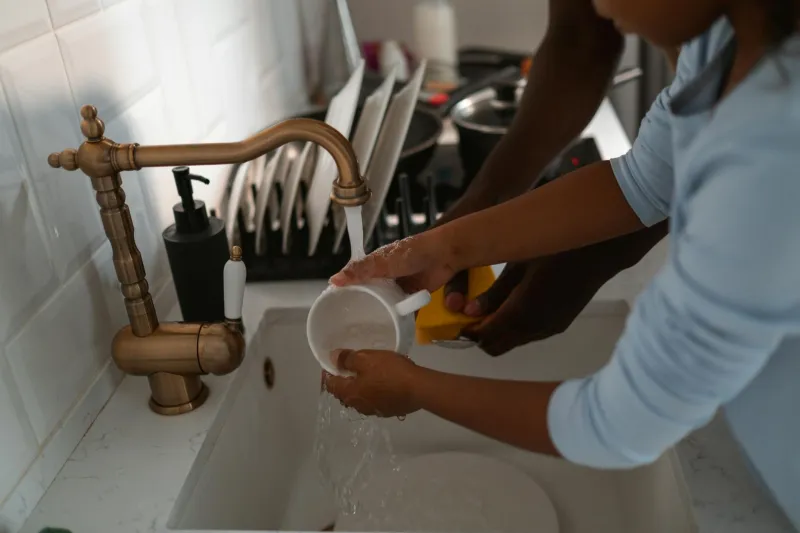
In 1985, if you walked into any American home and asked for a glass of water, nobody would hesitate before turning to the kitchen sink. The tap would turn, water would flow, and you'd drink it without question—just like the 240 million other Americans who consumed roughly 8 billion gallons of municipal tap water every single day.
Bottled water existed, but it occupied a tiny niche market. Perrier was a fancy European import that showed up at upscale restaurants. The idea that ordinary Americans would routinely purchase water in plastic bottles seemed as unlikely as buying air in bags. Public water fountains operated in every school, office building, and park without anyone wondering whether the water was safe to drink.
That unthinking confidence in tap water represented more than just hydration habits—it reflected deep trust in American infrastructure and public institutions. Municipal water systems were viewed as one of the great achievements of modern civilization, right alongside electricity and telephone service.
Today, that trust has evaporated along with our willingness to drink what flows from our faucets.
The Numbers Behind America's Water Anxiety
The transformation of American drinking habits tells a story that would have seemed impossible to previous generations. In 1976, the average American consumed less than 2 gallons of bottled water per year. By 2023, that figure had exploded to over 50 gallons annually—making bottled water the most consumed packaged beverage in America, surpassing even soft drinks.
The bottled water industry, which barely existed 50 years ago, now generates over $60 billion in annual revenue. Americans spend more on bottled water each year than the federal government spends on maintaining the entire national water infrastructure. We're literally paying more for packaged water than we invest in the systems that deliver water to every building in the country.
Simultaneously, the home water filtration industry has exploded into a $15 billion market. Refrigerators now come with built-in filtration systems as standard features. Hardware stores dedicate entire aisles to pitcher filters, faucet attachments, and under-sink purification systems that promise to remove contaminants from water that's already been treated by municipal facilities.
The message is unmistakable: Americans no longer trust the water flowing from their taps.
The Perrier Moment That Changed Everything
The bottled water revolution didn't begin with health concerns—it started with marketing genius. In the late 1970s, Perrier launched an advertising campaign that positioned sparkling water as a sophisticated alternative to alcohol and soft drinks. The distinctive green bottles became status symbols in yuppie culture, and suddenly drinking water became a lifestyle choice rather than a biological necessity.
But the real transformation came when companies like Coca-Cola and PepsiCo entered the market with brands like Dasani and Aquafina. These weren't exotic European springs—they were American companies bottling municipal tap water, filtering it, and selling it back to consumers at prices that would have seemed insane to previous generations.
The marketing was brilliant and insidious. Bottled water companies didn't directly attack tap water safety—they simply implied that their products were purer, cleaner, and more natural. Images of pristine mountain springs and crystal-clear lakes suggested that bottled water came from sources far superior to municipal treatment facilities.
Consumers began associating bottled water with health, purity, and self-care. Carrying a water bottle became a visible sign of wellness consciousness. The act of purchasing water transformed from necessity to lifestyle choice, and eventually to habit so ingrained that many Americans now feel uncomfortable drinking from public fountains.
When Crisis Shattered Confidence
While marketing laid the groundwork for bottled water's rise, genuine public health crises cemented America's loss of faith in tap water. The 2014 Flint water crisis became a watershed moment that fundamentally altered how Americans viewed their municipal water systems.
Images of children drinking lead-contaminated water, government officials downplaying obvious health risks, and families forced to rely on bottled water for basic needs created a national trauma around tap water safety. The crisis revealed that even in America, public water systems could fail catastrophically, and government agencies might not protect residents from obvious dangers.
Flint wasn't an isolated incident. Similar contamination issues emerged in communities across the country, from Newark to Pittsburgh to countless smaller towns. Each revelation reinforced the growing sense that municipal water systems were unreliable and potentially dangerous.
The cumulative effect was devastating to public trust. If Flint could happen—if an entire city could be poisoned by its own water supply while officials insisted everything was fine—then how could anyone trust their local tap water? The psychological impact extended far beyond the communities directly affected, creating national anxiety about water safety that persists today.
The Science Versus the Fear
The irony of America's bottled water obsession is that municipal tap water remains remarkably safe by historical and international standards. The Environmental Protection Agency regulates tap water under the Safe Drinking Water Act, which requires regular testing for over 90 different contaminants. Municipal water systems must publish annual quality reports detailing test results and any violations.
Bottled water, by contrast, is regulated by the FDA as a food product, with less stringent testing requirements and no mandatory public reporting. Studies have repeatedly shown that bottled water is not necessarily safer or purer than tap water—in many cases, it's literally the same water, processed through additional filtration steps before packaging.
But facts haven't overcome feelings. The psychological shift toward bottled water reflects deeper anxieties about institutional trustworthiness, environmental contamination, and personal control over health outcomes. When people choose bottled water, they're not just buying hydration—they're purchasing peace of mind and the illusion of control over their exposure to potential contaminants.
The home filtration industry has capitalized on these same anxieties, marketing products that promise to remove chlorine taste, reduce mineral content, or eliminate trace contaminants that may or may not pose actual health risks. The implicit message is that municipal water treatment isn't sufficient for health-conscious consumers who want to take personal responsibility for their water quality.
The Environmental Cost of Liquid Anxiety
America's retreat from tap water has created environmental consequences that dwarf any potential health benefits from bottled alternatives. The production of single-use plastic bottles requires enormous amounts of energy and generates massive waste streams. Americans discard roughly 60 million plastic water bottles every day, with recycling rates hovering around 30%.
The carbon footprint of bottled water is staggering when compared to tap water. Producing, packaging, transporting, and refrigerating bottled water requires approximately 1,400 times more energy than delivering tap water to the same consumer. The environmental cost of America's water anxiety represents one of the most irrational resource allocation decisions in modern consumer culture.
Meanwhile, the economic inefficiency is equally striking. Municipal water costs roughly $0.004 per gallon, while bottled water averages $1.50 per gallon—making it more expensive per unit than gasoline. Americans are paying premium prices for a product that's often identical to what flows from their taps, while simultaneously undermining the financial sustainability of the public infrastructure that makes universal water access possible.
The Municipal Water Paradox
The decline in tap water consumption has created a self-fulfilling prophecy that threatens the very systems Americans have lost faith in. Municipal water utilities fund operations through user fees and consumption charges. As residents shift to bottled water, revenue declines, making it harder to maintain and upgrade infrastructure.
This creates a vicious cycle: Reduced investment in water infrastructure leads to aging pipes and treatment facilities, which increases the likelihood of quality problems, which drives more consumers toward bottled alternatives, which further reduces revenue for system improvements.
Some communities have responded by raising water rates on remaining users, making tap water more expensive and bottled water relatively more attractive. Others have deferred maintenance and upgrades, increasing the risk of the very problems that drive consumers away from tap water in the first place.
The result is a gradual degradation of one of America's greatest public health achievements—universal access to safe, affordable drinking water.
The Path Back to the Faucet
Rebuilding trust in America's tap water will require both infrastructure investment and cultural change. Some communities have launched campaigns to promote tap water consumption, installing high-quality public fountains and encouraging restaurants to serve filtered tap water instead of automatically offering bottled alternatives.
The environmental movement has embraced tap water as a climate action, with organizations promoting reusable bottles and public education about the environmental costs of single-use plastic. Some cities have banned single-use plastic bottles in government buildings or public events, forcing residents to rediscover the convenience and safety of public water fountains.
Technology offers partial solutions through improved home filtration systems that address taste and odor concerns without requiring single-use packaging. Smart water monitoring systems can provide real-time information about water quality, potentially rebuilding confidence through transparency and data.
But the fundamental challenge remains psychological and cultural. Americans have internalized the idea that purchasing water represents responsible self-care, while drinking tap water feels like accepting unnecessary risk. Overcoming that perception will require rebuilding trust in public institutions and collective infrastructure—a challenge that extends far beyond water policy.
What We Lost When We Stopped Trusting the Tap
The decline of tap water consumption represents more than just changing consumer preferences—it reflects the erosion of shared faith in collective solutions to common problems. Municipal water systems embody the idea that communities can work together to provide essential services more efficiently and equitably than individual market transactions.
When Americans choose bottled water over tap water, they're not just making a consumer choice—they're expressing skepticism about public institutions, collective action, and the possibility that government can deliver services that serve everyone's interests.
The irony is that America's municipal water systems, despite their problems, remain one of the most successful examples of public infrastructure in human history. The fact that every building in America can access safe, drinkable water by turning a handle represents an engineering and public health achievement that previous generations would have considered miraculous.
Whether we can rebuild the trust necessary to sustain that achievement—or whether we'll continue fragmenting into individual water purchasing decisions—will determine not just how Americans hydrate, but how we think about shared responsibility for common needs.
The kitchen faucet still works. The question is whether we still believe in what it represents.