A Burst Appendix Was a Death Sentence in 1920 — The Unbelievable Transformation of American Medicine
A Burst Appendix Was a Death Sentence in 1920 — The Unbelievable Transformation of American Medicine
Picture a doctor's office in 1920s America. There's a wooden desk, a stethoscope, maybe a bottle of aspirin. The physician is well-educated, well-meaning, and almost completely powerless against the kinds of conditions that a modern emergency room handles before lunch.
Strep throat could kill you. A burst appendix almost certainly would. Tuberculosis was tearing through communities with nothing to stop it. And if a surgeon needed to know what was happening inside your body, the only real option was to open you up and look.
One hundred years later, American medicine has undergone a transformation so total that a doctor from 1920 would not recognize the profession they supposedly shared with their modern counterparts. This isn't just a story about better tools — it's a story about an entirely different understanding of what the human body is and how it works.
What Medicine Actually Looked Like in Early 20th Century America
Let's be specific, because the details matter.
In 1920, the average life expectancy in the United States was approximately 54 years. That number reflects a world where infections that we now treat with a three-day course of antibiotics were frequently fatal. Pneumonia, scarlet fever, typhoid, sepsis from a minor wound — these weren't rare tragedies. They were ordinary causes of death across every age group.
Penicillin didn't exist yet. It wouldn't be discovered until 1928, and it wouldn't be widely available as a treatment until the mid-1940s. In the decades before that, a physician facing a serious bacterial infection had essentially two options: supportive care (rest, fluids, hope) or surgery, which carried its own catastrophic infection risks given the limited understanding of sterile technique.
Imaging technology was in its absolute infancy. X-rays had been discovered in 1895 and were beginning to see limited use, but there were no CT scanners, no MRIs, no ultrasounds. If a patient came in with abdominal pain, diagnosing the cause was largely a matter of physical examination, experience, and educated guessing. A ruptured appendix, internal bleeding, or an abdominal tumor might not be identified until it was far too late.
And surgery itself — even when it was attempted — was a high-stakes gamble. Anesthesia was rudimentary. Post-operative infection was common. The mortality rate for many procedures that are now considered routine was genuinely sobering.
The Breakthrough That Changed Everything (And Then the Next One)
The story of modern medicine isn't one single leap — it's a cascade of revolutions, each one making the next possible.
The widespread availability of penicillin in the 1940s was arguably the single biggest shift. Bacterial infections that had killed millions for centuries became treatable almost overnight. Life expectancy began climbing in ways that had seemed impossible a generation earlier.
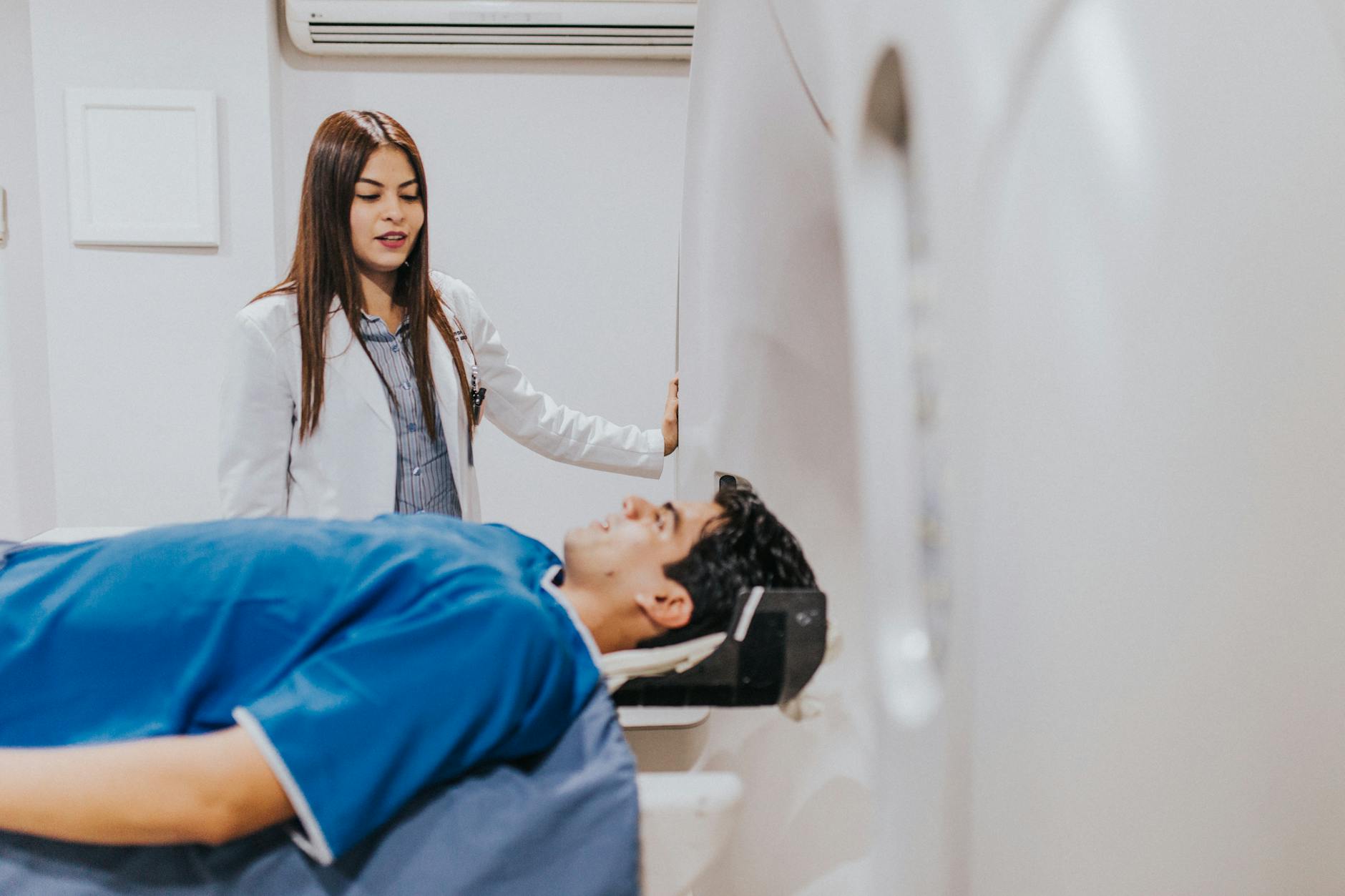
Then came imaging. The development of ultrasound technology in the 1950s and 1960s, followed by the first CT scanner in 1971 and the MRI in the early 1980s, gave physicians something they had never had before: the ability to see inside a living body without touching it. Diagnoses that once required exploratory surgery could now be made in an afternoon.
Surgical techniques transformed alongside the tools. Laparoscopic surgery — operating through tiny incisions using a camera and miniaturized instruments — became standard practice in the late 1980s and 1990s. What once required a large incision, weeks of recovery, and significant infection risk could now be done through openings smaller than a centimeter, with patients going home the same day.
And then there's what's happening right now.
The Present Would Look Like Science Fiction to a 1920s Physician
Robotic surgery systems like the da Vinci platform allow surgeons to operate with a precision no human hand can match, guided by high-definition 3D imaging inside the body. Remote surgery — a surgeon operating on a patient in a different location — has already been demonstrated.
Cancer treatments have moved from blunt-force chemotherapy toward targeted therapies that attack specific molecular markers on tumor cells, sparing healthy tissue in ways that would have seemed impossible twenty years ago, let alone a century ago.
And then there's CRISPR — the gene-editing technology that allows scientists to identify and modify specific sequences of DNA with a precision that would have been pure science fiction as recently as 2010. Clinical trials are already underway for using CRISPR to treat sickle cell disease, certain cancers, and inherited blindness. The idea that medicine might one day fix genetic errors at their source — the actual code of a human cell — is no longer theoretical.
The Numbers That Put It All in Perspective
- Life expectancy: 54 years (1920) vs. approximately 79 years (2023)
- Infant mortality rate: 76 per 1,000 live births (1920) vs. approximately 5.4 per 1,000 (today)
- Survival rate for appendicitis: Extremely low if perforated (1920) vs. greater than 99% with prompt modern treatment
- Tuberculosis deaths per 100,000: ~113 (1920) vs. fewer than 1 (today in the US)
What a Century Really Means
It's easy to take modern medicine for granted — the emergency room, the pharmacy on every corner, the routine blood test that screens for a dozen conditions simultaneously. These things feel ordinary because they've always been part of the world most of us grew up in.
But they aren't ordinary. They're the result of one of the most extraordinary runs of scientific progress in human history, compressed into a timeframe that our great-grandparents lived through from start to near-finish.
The doctor who treated your great-grandmother for pneumonia in 1922 did so with genuine skill, genuine compassion, and almost none of the tools that would have saved her life. That gap — between what medicine was and what it is — is one of the most remarkable distances the modern world has traveled.