The Corner Drugstore Pharmacist Knew Your Allergies by Heart — Now Algorithms Fill Your Pills
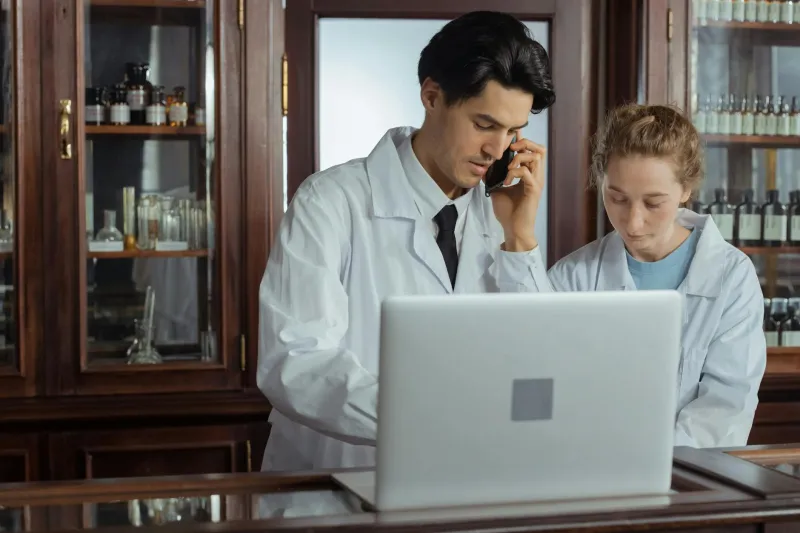
When Your Pharmacist Was Part of the Family
Walk into any CVS or Walgreens today, and you'll likely encounter a different pharmacist each visit. They'll scan your prescription, check your insurance, and hand you a white bag with minimal interaction. But rewind to 1960, and the experience couldn't have been more different.
Back then, the corner drugstore pharmacist wasn't just filling prescriptions — he was your family's medication guardian. He knew that Mrs. Johnson couldn't take penicillin, that young Tommy had asthma, and that Mr. Peterson's blood pressure medication didn't play well with his arthritis pills. This wasn't written in some digital file; it was stored in his memory, built through decades of serving the same families.
The Golden Age of Pharmaceutical Care
In the 1950s and 60s, America had over 50,000 independent pharmacies. These weren't just businesses; they were community institutions. The pharmacist often lived above or near his store, worked six days a week, and knew three generations of the same family. When Dr. Miller prescribed something new, the pharmacist might call to discuss potential interactions or suggest a different dosing schedule based on what he knew about the patient.
This personal knowledge proved invaluable. A 1965 study found that independent pharmacists caught medication errors at nearly twice the rate of their chain counterparts, simply because they knew their patients' complete medication histories by heart. They'd notice when someone was picking up prescriptions from multiple doctors who might not be communicating with each other — a common problem before electronic health records.
The Chain Revolution Changes Everything
The transformation began in earnest during the 1970s and accelerated through the 1990s. Corporate pharmacy chains promised convenience, longer hours, and lower prices. They delivered on those promises, but something essential was lost in translation.
Today, the three largest pharmacy chains — CVS, Walgreens, and Rite Aid — fill over 70% of America's prescriptions. The average chain pharmacist now processes 300-400 prescriptions per day, compared to the 50-100 that an independent pharmacist handled in 1960. There's simply no time for the kind of personal attention that once defined pharmaceutical care.
When Efficiency Meets Health Consequences
This shift toward volume and efficiency has created measurable health impacts. A 2019 study published in the Journal of the American Medical Association found that patients who consistently used the same independent pharmacy had 23% fewer medication-related emergency room visits compared to those who filled prescriptions at multiple chain locations.
The difference comes down to continuity of care. Your grandfather's pharmacist knew he was taking warfarin for his heart and would immediately flag any new prescription that could cause dangerous bleeding. Today's system relies on computer algorithms to catch these interactions, but the software doesn't know that you sometimes skip doses when you're traveling, or that you're also taking herbal supplements you bought online.
The Human Element That Algorithms Can't Replace
Modern pharmacy technology is impressive. Computer systems can instantly check for drug interactions, insurance coverage, and generic alternatives. But they can't replicate the intuitive understanding that came from years of personal relationships.
Consider this: the old-time pharmacist knew that elderly Mrs. Thompson had trouble opening childproof caps, so he'd automatically use easy-open bottles. He knew that teenage Sarah was embarrassed about her acne medication, so he'd discreetly counsel her about proper usage. He knew that Mr. Rodriguez worked night shifts, so he'd time his medication to match his unusual sleep schedule.
These weren't recorded anywhere — they were part of the pharmacist's mental database of human details that made medicine work better for real people living real lives.
What We've Gained and Lost
To be fair, modern pharmacy has delivered significant improvements. Prescription costs have generally decreased, availability has increased dramatically, and serious dispensing errors have dropped thanks to computerized systems and barcode scanning. You can fill a prescription at 2 AM or while traveling across the country — conveniences that were unimaginable in the corner drugstore era.
But we've also lost something irreplaceable: the human safety net. A 2021 survey found that only 34% of Americans could name their primary pharmacist, compared to 87% in 1970. More troubling, medication adherence rates — how well patients follow their prescribed regimens — have actually declined despite all our technological advances.
The Cost of Becoming a Number
Today's pharmacy experience often feels transactional rather than relational. You're not Mrs. Johnson with the penicillin allergy; you're prescription number 4,847,392. The pharmacist might not even make eye contact as they hand you your medication, rushing to fill the next order in an endless queue.
This depersonalization has real consequences. Studies show that patients who have ongoing relationships with healthcare providers — including pharmacists — are more likely to take medications as prescribed, ask important questions about side effects, and report problems before they become serious.
Looking Forward: Can We Reclaim What We Lost?
Some independent pharmacies are fighting back, offering services that chains can't match: comprehensive medication reviews, specialized compounding, and yes, the kind of personal attention that once defined the profession. A few chain pharmacies are also experimenting with clinical services, trying to recreate some of that lost personal touch.
But the economics remain challenging. Independent pharmacies continue to close at a rate of about 1,000 per year, victims of insurance reimbursement cuts and corporate competition.
The corner drugstore pharmacist who knew your name — and your medical history — represents more than nostalgia. He embodied a model of healthcare that prioritized relationships over transactions, quality over quantity. As we navigate an increasingly impersonal healthcare system, it's worth asking: what other essential human elements are we losing in our rush toward efficiency?
Your prescription might be filled faster today, but your health might be paying the price for that speed.