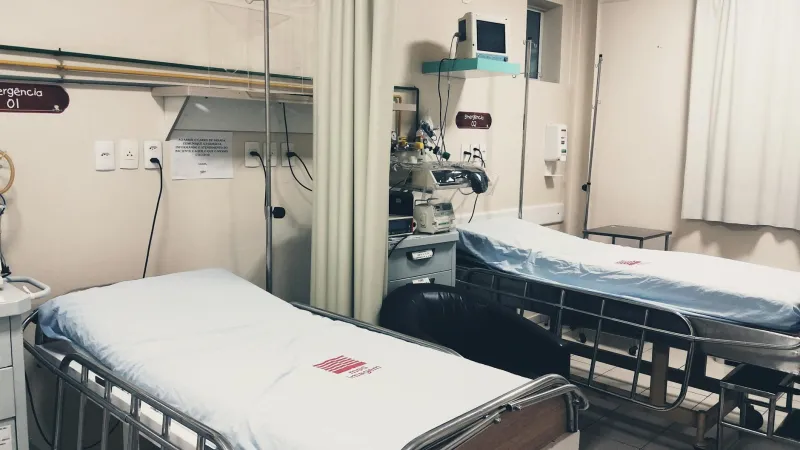
The Emergency Room That Wasn't Really There
In 1955, if you broke your leg in a car accident, your journey through the American healthcare system looked nothing like today. There was no specialized trauma team waiting for you. No CT scanner to reveal internal bleeding. No orthopedic surgeon on call 24/7. Instead, you'd likely find yourself in a hospital room that doubled as everything from a surgery prep area to a waiting room, attended by whoever happened to be on duty.
The very concept of emergency medicine as we know it didn't exist. Hospitals had "accident rooms" or "casualty wards," but these were often little more than glorified first aid stations staffed by whoever was available — sometimes a nurse, sometimes an intern, occasionally a family doctor who happened to be making rounds.
When Medical Emergencies Were Medical Mysteries
Consider what happened when someone arrived at a hospital with chest pain in 1960. Without EKG machines readily available, without blood tests that could detect heart attacks within minutes, without cardiac catheterization labs, doctors relied primarily on observation and educated guessing. A heart attack might be diagnosed hours or even days after the fact — if the patient survived long enough for symptoms to become obvious.
Internal injuries were particularly devastating. A ruptured spleen or internal bleeding from a car accident was often a death sentence, not because the injury itself was untreatable, but because there was no way to quickly identify and address it. Surgeons operated blind, quite literally, without the imaging technology that today's emergency physicians take for granted.
The statistics tell a sobering story: in 1960, fewer than 80% of people who suffered major trauma survived long enough to leave the hospital. Today, that number has climbed to over 96% for similar injuries.
The Birth of the Golden Hour
The transformation began in the 1970s, when military doctors returning from Vietnam brought hard-won lessons about trauma care to American hospitals. They had learned that the first hour after a serious injury — what they called the "golden hour" — was absolutely critical for survival.
This insight revolutionized emergency medicine. Hospitals began creating dedicated emergency departments with specialized staff. The concept of triage — prioritizing patients based on the severity of their condition rather than their arrival time — became standard practice.
By 1980, emergency medicine had become a recognized medical specialty. Doctors could now train specifically for emergency care, learning to make split-second decisions that could mean the difference between life and death.
Technology That Sees Through Skin
Perhaps nothing illustrates the transformation more dramatically than the evolution of diagnostic technology. In 1965, if you hit your head in a car accident, doctors had no way to see inside your skull without surgery. A brain bleed might go undetected until it was too late.
Today, a CT scan can reveal a brain hemorrhage within minutes of your arrival at the emergency room. MRI machines can detect strokes in their earliest stages. Ultrasound machines can spot internal bleeding before symptoms even appear.
The speed of diagnosis has accelerated beyond recognition. Blood tests that once took days now take minutes. X-rays that required lengthy processing now appear on screens instantly. What used to be guesswork is now precision medicine.
From Bed Rest to Same-Day Surgery
The treatment revolution has been equally dramatic. That broken leg that once required six weeks of complete bed rest? Today's orthopedic surgeons can insert titanium rods and have you walking with assistance within days. Hip replacements that once meant months of recovery now send patients home the same day.
Even more remarkable is what emergency medicine can now fix on the spot. Heart attacks can be stopped in their tracks with clot-busting drugs administered within minutes. Strokes can be reversed with techniques that literally pull blood clots from brain arteries. Trauma surgeons can repair injuries that would have been instantly fatal just decades ago.
The Human Cost of Medical Progress
But perhaps the most profound change is in survival rates for conditions that were once automatic death sentences. A massive heart attack in 1960 had a survival rate of less than 30%. Today, it's over 90%. A stroke that would have meant certain disability now has a good chance of full recovery if treated quickly enough.
The numbers are staggering when you step back and look at the big picture. Americans today are more likely to survive almost every type of medical emergency than their grandparents were. We're more likely to walk away from car accidents, recover from heart attacks, and survive traumatic injuries.
What We Gained When Medicine Got Fast
This transformation didn't just save lives — it changed how we think about injury and illness. Our grandparents lived with a fatalistic acceptance that accidents happened and people died. Today, we expect medicine to fix almost everything, and remarkably often, it does.
The emergency room has become America's safety net in ways that extend far beyond trauma care. It's where the uninsured go for basic healthcare, where mental health crises get addressed, where addiction gets treated. The modern ER handles everything from heart attacks to anxiety attacks, from broken bones to broken spirits.
Yet this medical miracle comes with its own costs. The average emergency room visit now costs over $1,400. The technology that saves lives also drives up healthcare expenses. The speed and specialization that make modern emergency medicine so effective also make it incredibly expensive.
Still, when you consider that a broken bone once meant months of uncertainty and potential permanent disability, while today it means a few hours in the ER and a follow-up appointment, it's hard not to marvel at how far we've come. We've built a medical system that can literally bring people back from the brink of death — and we've started to take that miracle for granted.