When Photos Mattered: How We Lost the Weight of Memory in a Flood of Images
When a Photograph Was an Event
In 1960, if your family wanted a professional photograph taken, you planned for it. You made an appointment with the local photographer weeks in advance. You bought new clothes—or pressed and mended the ones you had. You arranged your schedule around the session. You spent money: a formal portrait session cost between $15 and $50, which in 1960 dollars was equivalent to $150-$500 in today's money. That was real money. That was significant.
You arrived at the studio at the appointed time. The photographer arranged you carefully—your posture, your expression, the angle of your head. They adjusted the lighting. They checked the focus. They took, perhaps, three or four photographs. Maybe six if it was a special occasion.
Then you waited. The film had to be developed—a process that took days or weeks. You returned to the studio to see the proofs. You selected which image you wanted printed. You paid for the prints. A 5x7 might cost $2. An 8x10 might cost $4. You bought one or two. Maybe a dozen copies if it was a family portrait you wanted to give to relatives.
That photograph then entered your life as an object. It went into a frame, hung on a wall, and lived there for years. Or it went into an album, where you placed it carefully, wrote the date and names on the back, and stored the album on a shelf where it would be consulted regularly. Families gathered to look at photographs. Children asked about relatives in the photos. The images became anchors for memory and family narrative.
A formal family portrait in 1960 was a milestone event. You did it when something significant happened—a wedding, a new baby, a major anniversary. You might have your portrait taken once every five or ten years. That was normal. That was enough.
The Infinite Image
Now consider what happened.
First came the snapshot camera—the portable camera you could carry with you and use informally. This democratized photography but didn't fundamentally change its nature. You still had to buy film. You still had to get it developed. You still had a limited number of exposures per roll. A 24-exposure roll of film lasted weeks or months. You were still being somewhat intentional about which moments you captured.
Then came digital cameras. Suddenly the cost of taking a photograph dropped from 25-50 cents per image to essentially zero. The marginal cost of a 1,000th photo was the same as the first: nothing. The friction of film scarcity disappeared.
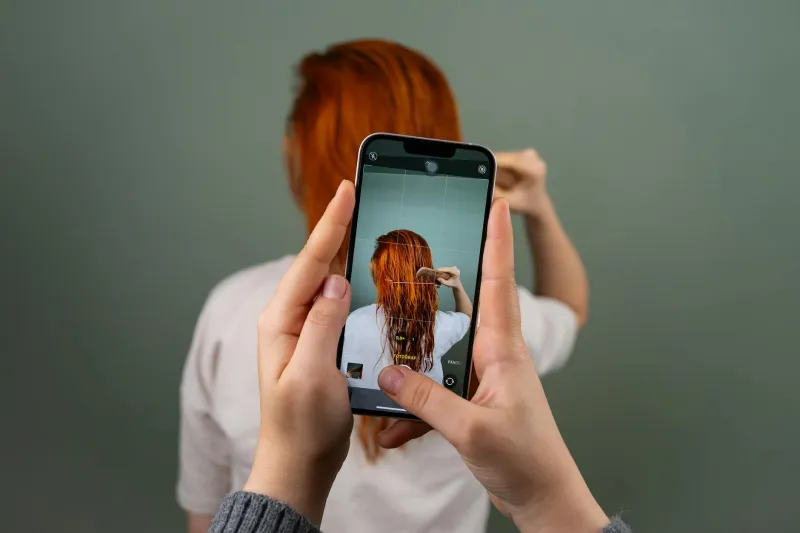
Then came smartphones. Now you carried a camera everywhere. It was always with you. Taking a photo required no planning, no expense, no decision. You could take 50 photos of your child's soccer game and pick the best one later. You could photograph your lunch. You could photograph your friends. You could photograph yourself—repeatedly, endlessly.
The numbers are staggering. In 2023, estimates suggest that roughly 1.72 trillion digital photographs will be taken globally. The average smartphone user takes 150+ photos per month. A person might now take in a year what would have been a lifetime's worth of photographs in 1960.
And then what happens to these images? Most of them disappear. They live on phones, in cloud storage, on social media platforms where they're seen once and then buried under a thousand more images. They're never printed. They're never placed in an album. They're never hung on a wall. They're never shown to children or grandchildren. They're archived in a digital folder called "iPhone Photos" and forgotten.
The Paradox of Abundance
This creates a strange paradox: we take more photographs than ever before, but we preserve fewer of them. We document our lives obsessively, but we're creating less lasting memory.
Consider what happens when you want to remember something. In 1960, you might have six photographs from a family vacation—one roll of film, carefully shot. You looked at the album. You remembered the trip because you'd reviewed those images regularly over the years. They were there, physically present, requiring no technology to access.
Today, you have 300 photographs from the same vacation, taken on your phone. They're stored in the cloud, backed up to your computer, maybe uploaded to social media. But do you ever look at them? Studies suggest most people never do. The photos exist in a kind of digital limbo—taken but not seen, preserved but not accessed, documented but not remembered.
Worse, they might disappear entirely. A crashed hard drive, a forgotten cloud password, a company that goes bankrupt and deletes user data—and suddenly those 300 images are gone. Whereas a physical photograph from 1960 might have survived for 60+ years, a digital image might vanish in 5.
What the Change Costs
There's a psychological cost to this shift. In 1960, the act of taking a photograph was an act of choosing. You chose which moments were significant enough to document. This required judgment. It required you to think about what mattered.
Today, you document everything, which means you're essentially choosing nothing. Every moment is equally preserved and equally forgettable. The photographer in 1960 was making a statement: "This moment is worth remembering." The smartphone user in 2024 is making no such statement. They're just capturing.
There's also a financial cost, though it's hidden. Printing a photograph costs money—$0.50-$1.50 per print at a drugstore, more if you're ordering professionally. This cost created a natural filter. You didn't print every photo. You printed the ones that mattered. This forced intentionality.
Today, because printing is optional and most people don't do it, there's no such filter. And because there's no filter, nothing stands out. Everything is equally archived and equally forgotten.
There's also a temporal cost. A physical photograph album required time to assemble—selecting images, printing them, arranging them, writing captions. This act of assembly was itself a form of memory work. You were engaged with the images, thinking about them, organizing them, deciding what story they told.
With digital photos, there's no such work. You take the images and they're automatically backed up, automatically organized by date and location. You never have to think about them again. The work of memory-making has been outsourced to algorithms.
The Generational Divide
This creates a strange historical problem. In 100 years, a person from 1960 will have left behind a coherent photographic record of their life. Their grandchildren will be able to look at an album and see their ancestor's face, their family, their moments of significance.
A person from 2024 will have left behind 50,000+ digital images, most of which will be inaccessible, corrupted, or lost. The grandchildren won't know what to look at. The sheer quantity of images will make finding anything meaningful nearly impossible.
We've created a paradox: more documentation, less memory. More images, fewer stories. More photographs than any generation in history, and yet we're creating less lasting visual record than our grandparents did.
The Return of Intention
There are signs of a small counter-movement. Some people are printing photos again. Some are keeping physical albums. Some are deliberately limiting how many photos they take, trying to restore intentionality to the act of photography.
These people understand something that the smartphone generation has partially forgotten: that the value of a photograph isn't in the taking. It's in the keeping, the viewing, the remembering. A photograph that's never seen is just data.
Your great-grandmother had six photographs from her 1950s vacation. She looked at them dozens of times over her life. They became part of her family's visual memory. They told a story.
You have 300 photographs from your last vacation. You looked at them once, maybe twice. You'll probably never see them again. In five years, you won't remember what they showed. In fifty years, they might not exist at all.
We gained convenience and lost intention. We gained infinite capacity and lost meaningful scarcity. We gained the ability to document everything and lost the discipline to preserve anything. That's the hidden cost of the digital image—not in dollars, but in the slow erosion of how we build and hold onto memory.