The Hardware Man Who Fixed Everything — Before We Started Throwing It All Away
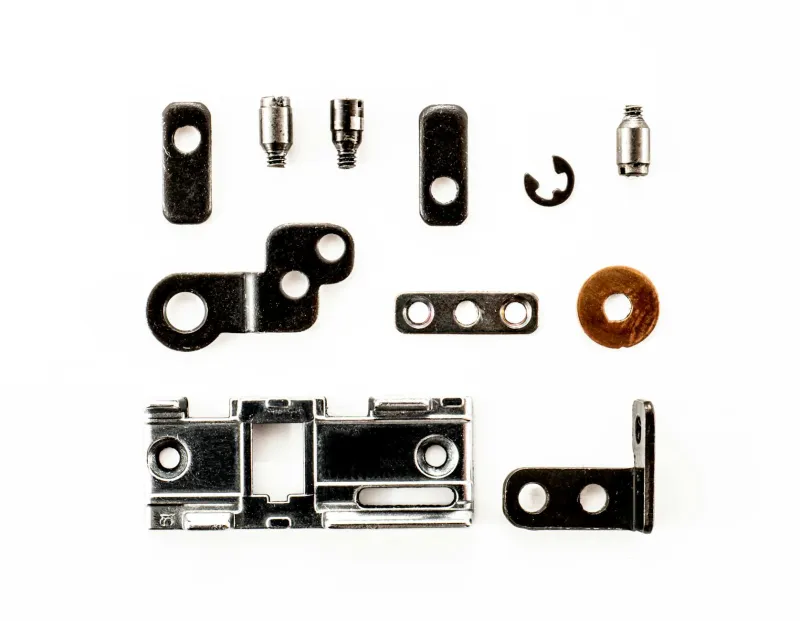
When Every Block Had Its Own Fix-It Guru
Walk into Murphy's Hardware on Elm Street in 1965, and Murphy himself would look up from behind a counter barely visible beneath decades of accumulated parts, tools, and solutions to problems you didn't even know you had. The bell above the door would announce your arrival to a man who could diagnose your leaky faucet from the way you described the sound it made at 2 AM.
"Ah, you've got a worn washer in that old Kohler," he'd say, disappearing into the maze of narrow aisles before returning with a 15-cent rubber ring that would buy you another decade of peaceful sleep. Murphy knew every house in the neighborhood by its quirks — the Johnsons' stubborn storm door, the Millers' temperamental furnace, the way Mrs. Peterson's kitchen sink had been installed slightly off-level in 1943.
This wasn't just commerce. It was neighborhood infrastructure disguised as a small business.
The Death of the Fix-It Economy
Today, that same problem sends you to a 180,000-square-foot warehouse where you'll spend twenty minutes just finding the plumbing aisle. The teenage employee you finally locate will scan a barcode, shrug, and suggest you "try aisle 23, maybe?" You'll leave with a $47 faucet replacement kit when you needed a 50-cent washer, assuming you can find anyone to help you figure out which washer fits your particular model of particular brand installed in your particular decade.
The numbers tell the story of what we've lost. In 1960, there were roughly 70,000 independent hardware stores across America. Today, fewer than 12,000 remain. Meanwhile, Home Depot and Lowe's operate about 4,000 stores combined, each one large enough to house Murphy's entire block.
We traded intimacy for inventory, expertise for square footage.
When Knowing Your Customer Meant Knowing Their House
The old hardware store owner was part merchant, part engineer, part neighborhood historian. He knew that the houses on Oak Street all used the same peculiar window hardware because they were built by the same contractor in 1952. He knew which furnace filters worked best in the local climate, which paint held up against the specific challenges of Midwestern winters or Gulf Coast humidity.
Murphy's business model was simple: sell you exactly what you needed, nothing more, nothing less. His profit came from volume and loyalty, not from convincing you to buy the deluxe version of everything. When your lawn mower wouldn't start, he'd sell you a $3 spark plug and spend ten minutes explaining why your carburetor was flooding, not a $400 tune-up kit.
This knowledge was hyperlocal and irreplaceable. When Murphy retired and his store closed, decades of accumulated wisdom about the neighborhood's infrastructure retired with him.
The Warehouse Experience Nobody Asked For
Step into a modern big-box hardware store, and you're entering a monument to the assumption that more choices equal better service. Forty-seven different types of screws, sixty-three varieties of light bulbs, and an entire aisle devoted to fasteners you'll never need but can't avoid walking past.
The modern hardware shopping experience has become an exercise in translation. You know you need "that little metal thing that holds the toilet handle in place," but the store organizes its 50,000 products by manufacturer part numbers and technical specifications that assume you're a professional contractor.
The employees, when you can find them, are often seasonal workers who know the computer system but not the products. They can tell you what aisle something is supposed to be in, but they can't tell you whether it will actually solve your problem. The institutional knowledge that once lived in Murphy's head now exists nowhere at all.
The Hidden Cost of Going Big
This shift from neighborhood expertise to warehouse efficiency has quietly rewired how Americans relate to their homes. We've become a nation of replacers rather than repairers, partly because replacement has become easier than diagnosis.
When your grandfather's kitchen faucet started dripping, he walked two blocks to ask Murphy what was wrong. Murphy sold him the right part and probably threw in the advice for free. When your faucet starts dripping, you Google the problem, drive across town to a warehouse, wander until you find someone to help, buy more than you need, and often end up replacing the entire fixture because troubleshooting has become more expensive than starting over.
The economic implications ripple outward. The average American household now spends 40% more on home maintenance and repairs than households did in 1980, adjusted for inflation. We're not maintaining our homes more — we're maintaining them less efficiently.
What We Lost When We Gained Everything
The old hardware store was never really about hardware. It was about having a neighborhood expert who understood your specific problems and had a vested interest in solving them correctly the first time. Murphy's reputation depended on the Johnsons' storm door working properly for the next twenty years, not on selling them the most expensive storm door in stock.
That relationship created a feedback loop of expertise. Every problem Murphy solved taught him something new about the neighborhood's infrastructure. Every satisfied customer brought him new problems to solve. The store became smarter over time, accumulating knowledge like sediment.
The big-box model breaks this loop. Corporate efficiency demands standardized solutions, not customized wisdom. The store knows everything about inventory management and nothing about why Mrs. Peterson's sink drains slowly every March.
The Neighborhood That Fixed Itself
We've gained convenience and selection, but we've lost something harder to measure: the infrastructure of community knowledge. The hardware store was where neighbors learned about their homes from someone who understood both the houses and the people who lived in them.
Murphy didn't just sell parts. He sold the confidence that came from knowing your problem had a solution, your house had a history, and your neighborhood had someone who cared about keeping both in working order.
Now we have everything we might need, and no one who knows what we actually need. That's not progress — that's just bigger.