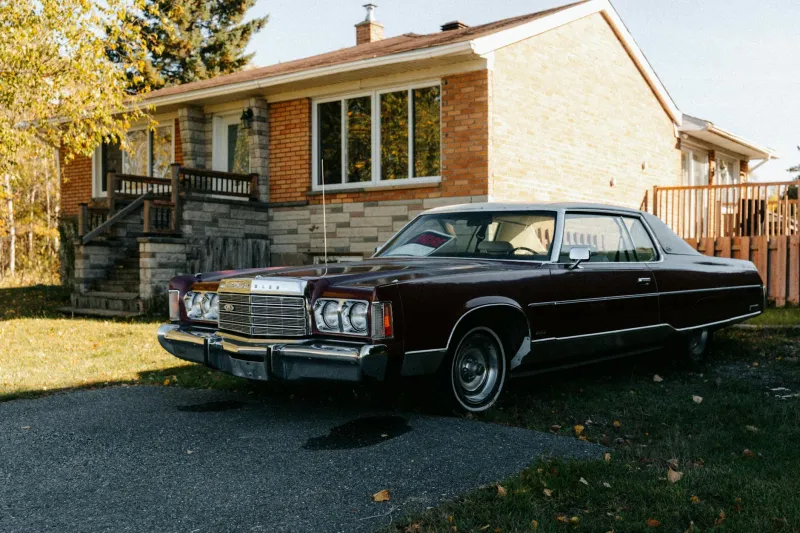
When One Set of Keys Ruled the Household
Picture this: It's 1965, and the Johnson family down the street has one car sitting in their driveway—a powder-blue Chevrolet Impala that Dad drives to work each morning. Mom walks to the grocery store three blocks away, the kids bike to school, and Saturday errands require military-level coordination. Nobody thinks this arrangement is unusual, inconvenient, or a sign of financial hardship. It's just life.
 Photo: Johnson family, via m.media-amazon.com
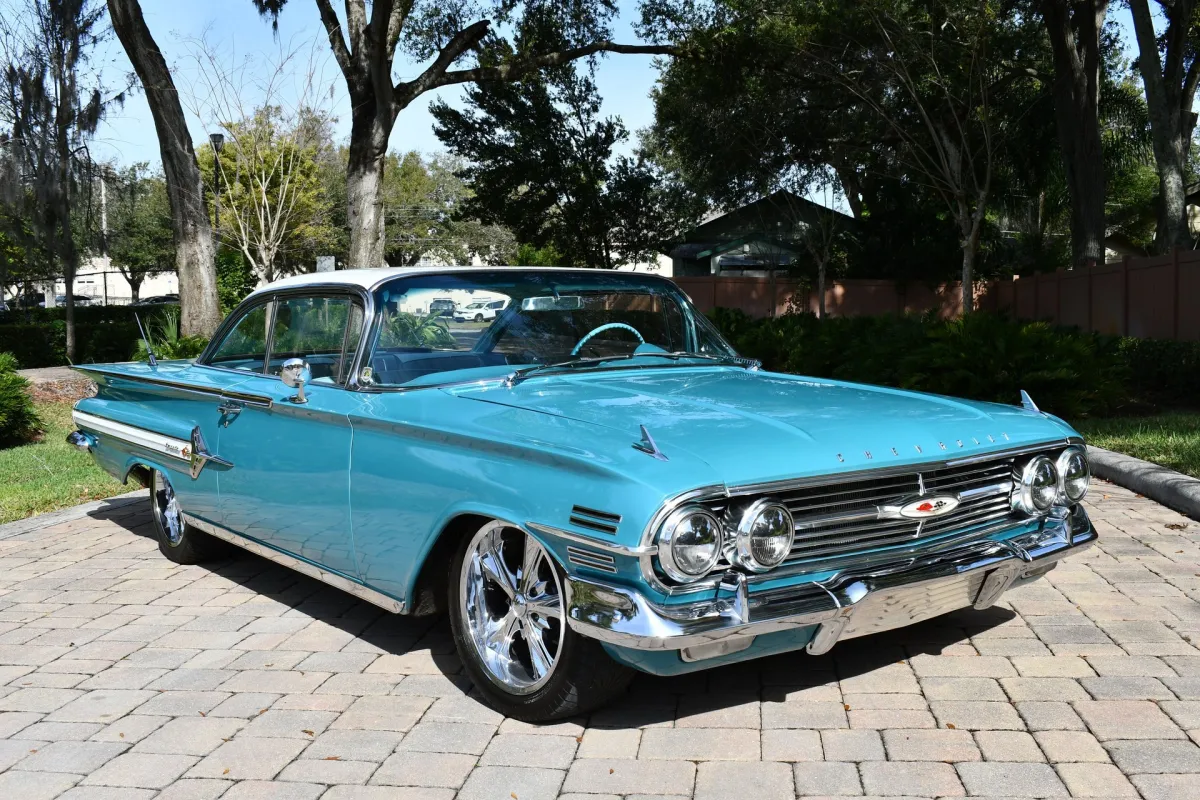 Photo: Chevrolet Impala, via cdn.dealeraccelerate.com
Fast-forward to today, and that same scenario would feel like deprivation to most American families. We've quietly transformed from a nation where one car per household was the norm into one where multiple vehicles are considered essential. But somewhere in that transformation, we traded away more than we realize.
The Arithmetic of Automotive Dependency
In 1960, there were roughly 0.8 vehicles for every American household. Today, that number has climbed to 1.9 vehicles per household, with many families owning three, four, or even five cars. What changed wasn't just our buying power—it was our entire concept of mobility and independence.
The financial mathematics are staggering. The average American household now spends over $12,000 annually on transportation, making it the second-largest expense after housing. That's roughly 16% of total household spending. For a family maintaining three vehicles, the costs compound: insurance premiums, registration fees, maintenance schedules, and the relentless depreciation that turns today's $35,000 purchase into tomorrow's $15,000 trade-in.
Our grandparents' generation allocated maybe 8% of their household budget to transportation. The difference represents thousands of dollars annually that once went toward savings, education, or experiences—money that now disappears into gas tanks and monthly payments.
The Choreography of Shared Transportation
One-car families operated on a completely different rhythm. Dad typically claimed the vehicle for his commute, which meant Mom's errands required strategic planning. Shopping happened once or twice a week, not in the random, frequent trips that define modern suburban life. Kids walked to school, rode bikes to friends' houses, and learned public transportation routes.
This wasn't hardship—it was coordination. Families talked more because they had to negotiate schedules. Neighborhoods developed differently because businesses knew customers would arrive on foot or by bicycle. The corner grocery store, the local pharmacy, and the nearby elementary school weren't quaint historical artifacts; they were economic necessities that shaped community design.
Carpools weren't just for soccer practice—they were daily logistics. Parents took turns driving groups of kids to school, creating informal networks of shared responsibility. These arrangements built relationships between families and taught children that community cooperation was normal, not exceptional.
How Suburbs Killed the Walking Life
The shift to multi-car households didn't happen in isolation. It paralleled the explosive growth of suburban development designed around automotive access. Subdivisions sprawled farther from town centers, strip malls replaced walkable main streets, and zoning laws separated residential areas from commercial districts.
By the 1980s, American communities had been redesigned around the assumption that every adult would have independent access to a vehicle. Sidewalks disappeared from new developments. Public transportation withered outside major metropolitan areas. The distance between homes and daily necessities stretched beyond walking range.
This created a feedback loop: As neighborhoods became less walkable, families needed more cars to function. As more families acquired multiple vehicles, developers felt justified in building communities that required them. The result is the modern American suburb, where a broken-down car can leave someone genuinely stranded.
The Hidden Costs of Automotive Independence
Multi-car ownership reshaped family finances in subtle ways. Monthly car payments became as routine as utility bills, normalizing perpetual debt for depreciating assets. Families began viewing vehicles as individual possessions rather than shared tools, with teenagers expecting their own cars and parents maintaining separate vehicles for convenience.
Insurance companies adapted by offering multi-car discounts, but even discounted premiums for three vehicles exceed the single-car rates our grandparents paid. Maintenance schedules multiplied. Garage space became a premium home feature. Driveways expanded to accommodate multiple vehicles, eating into yard space and increasing property development costs.
The psychological shift was equally significant. Independence became equated with individual mobility. The idea of coordinating transportation with family members began to feel restrictive rather than cooperative. Walking or biking for errands started to seem unusual, even suspicious, in communities designed around automotive access.
What We Gained and What We Lost
Multiple-car households undeniably provide convenience and flexibility. Parents can maintain different work schedules without complex logistics. Teenagers gain independence earlier. Families can pursue activities in different directions simultaneously.
But the trade-offs were substantial. The thousands of dollars now absorbed by transportation costs represent money that previous generations invested in home ownership, education, or retirement savings. The physical activity built into walking and biking errands disappeared from daily routines. The community connections fostered by shared transportation and neighborhood-scale commerce weakened.
Most significantly, we normalized a level of financial commitment to transportation that would have seemed absurd to earlier generations. What once represented freedom—the ability to go anywhere—became a form of economic captivity, with households locked into monthly payments, insurance premiums, and maintenance costs that stretch across decades.
The Road Back to Sanity
Some American families are quietly rediscovering the benefits of reduced car ownership. Urban communities with walkable infrastructure and reliable public transportation make single-car or even car-free living possible. Remote work has reduced commuting needs for some households, making shared transportation more practical.
But for most Americans, the infrastructure decisions of the past 50 years make multi-car ownership feel inevitable. Reversing course would require rebuilding communities around human scale rather than automotive convenience—a transformation that would take decades and enormous public investment.
The one-car family wasn't a relic of poverty or limited ambition. It was a different approach to mobility that prioritized coordination over convenience, community over individual autonomy, and financial prudence over automotive status. Whether we can find our way back to those values while maintaining modern life's genuine advantages remains an open question.
For now, most American driveways tell the story of how we traded financial flexibility for transportation independence—and whether we got a fair deal depends entirely on what we think mobility should cost.