The Five-Cent Social Hour
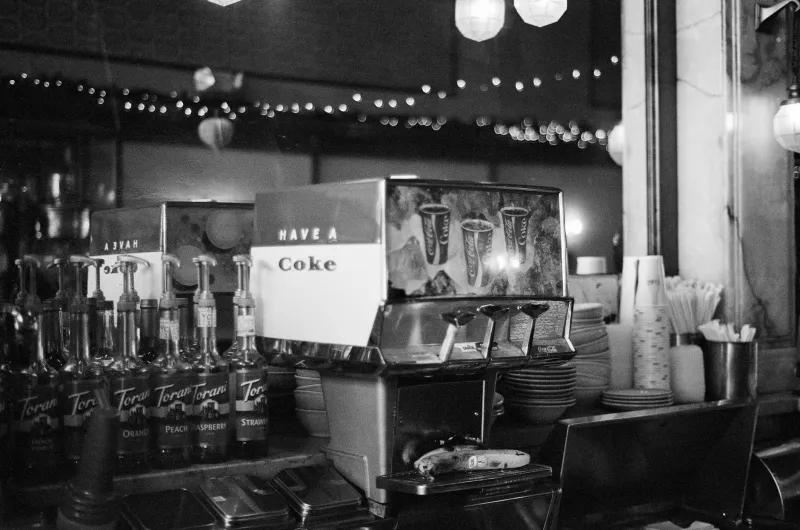
Walk into any American drugstore in 1955, and you'd find the beating heart of the neighborhood at the soda fountain counter. For a nickel — about 50 cents in today's money — you could order a Coca-Cola served in a real glass, mixed fresh from syrup and carbonated water, and served so cold it made your teeth ache. But you weren't just buying a drink. You were buying a social experience that lasted as long as you wanted it to.
The soda jerk behind the counter knew your name, your usual order, and probably your family's business. Teenagers gathered after school to share a single soda with multiple straws. Adults stopped by for a phosphate or cherry Coke while running errands. The fountain was democracy in action — a place where the bank president and the shoe repair man might find themselves sitting side by side, both nursing the same five-cent refreshment.
This wasn't just small-town nostalgia. Major cities across America were dotted with thousands of these fountains, from corner drugstores to department store lunch counters. Woolworth's alone operated over 2,000 soda fountains at their peak, serving millions of Americans their daily dose of caffeine and community.
When Bottles Were Worth Something
Even when you bought your soda to go, the transaction carried weight — literally. Glass bottles came with a deposit, usually two or three cents, which meant every empty bottle had value. Kids scoured neighborhoods looking for discarded bottles to return for pocket money. The bottles themselves were built to last, washed and refilled dozens of times before being recycled.
A six-pack of Coca-Cola in 1960 cost about 50 cents, including the bottle deposits. Adjusted for inflation, that's roughly $4.50 today — but those bottles were returnable, effectively reducing the actual cost of the beverage to about $3.50 in modern dollars. Compare that to today's convenience store prices, where a six-pack of Coke easily runs $6 to $8, and the bottles go straight into landfills.
The economics were straightforward: beverages were cheap, bottles were valuable, and waste was minimal. The entire system was designed around reuse and local distribution.
The Death of the Fountain
The decline began in the 1960s with the rise of fast food and suburban shopping centers. McDonald's and Burger King offered quick service and standardized products, but they couldn't replicate the leisurely social atmosphere of the neighborhood fountain. The new suburban lifestyle prioritized speed and convenience over conversation and community.
By the 1970s, most drugstore chains had abandoned their fountains entirely. The real estate was more valuable as retail space, and the labor costs of employing skilled soda jerks couldn't compete with automated dispensing machines. The last major chain to maintain fountains was Walgreens, which finally eliminated most of theirs in the 1980s.
What replaced the soda fountain wasn't another gathering place — it was the vending machine and the convenience store cooler. Drinks became something you grabbed on the go rather than something you lingered over.
The Premium Hydration Revolution
Fast-forward to today, and Americans spend more on beverages than previous generations could have imagined. The average American household now spends over $850 annually on non-alcoholic beverages — more than many families spent on their entire grocery bill in the 1950s.
We've created an entire industry around premium hydration. Bottled water, which was virtually unknown in 1970, now represents a $18 billion market. Energy drinks didn't exist before the 1990s and now generate $15 billion in annual sales. Cold-pressed juices, kombucha, and functional beverages have created categories that would have baffled our grandparents.
A 20-ounce bottle of water at a convenience store costs $1.50 to $2.00 — making it more expensive per gallon than gasoline. The same volume of Coca-Cola that cost a nickel in 1955 now costs $2.50 or more from a vending machine.
What We Lost in the Transformation
The shift from fountain to bottle represents more than just a change in packaging — it's a fundamental transformation in how Americans think about refreshment and social interaction. The soda fountain was a third place between home and work where community happened naturally. Today's beverage consumption is largely solitary and portable.
We've also lost the concept of the drink as a destination rather than an accessory. The soda fountain visit was an event in itself, a reason to pause and connect with neighbors. Today's beverages are designed to be consumed while doing something else — driving, working, exercising.
The environmental cost is staggering. Americans discard over 60 billion plastic bottles annually, compared to the returnable glass system that wasted virtually nothing. We've traded sustainability for convenience and paid premium prices for the privilege.
The Economics of Liquid Convenience
Perhaps most remarkably, we've convinced ourselves that paying premium prices for basic refreshment is normal. A family of four can easily spend $15 on beverages during a single meal out — more than an entire week's worth of soda fountain visits would have cost their great-grandparents.
The markup on beverages has become one of the highest-profit categories in retail. Restaurants routinely charge $3 for soft drinks that cost them 30 cents to provide. Gas stations sell energy drinks for $3.50 that contain ingredients worth less than 50 cents.
Yet consumers accept these prices as reasonable, partly because we've forgotten what reasonable used to look like. When your reference point is a $5 latte, a $2 bottle of water seems like a bargain.
The Subscription Soda Future
The latest evolution in American beverage culture takes the premium trend even further. Subscription services now deliver "curated" beverages to your door for $30 to $50 per month. Functional drinks promise everything from improved focus to better sleep. Personalized hydration apps track your water intake and remind you to drink more.
We've managed to turn one of humanity's most basic needs — staying hydrated — into a complex, expensive lifestyle choice requiring apps, subscriptions, and specialized products.
When Simple Was Sufficient
The transformation of American beverage culture reveals something profound about how we've changed as a society. We've traded community gathering places for individual convenience, sustainable practices for disposable culture, and reasonable prices for premium positioning.
Our grandparents got their daily caffeine fix for pocket change while catching up with neighbors. We get ours from a $6 artisanal coffee drink consumed alone in traffic. They returned their bottles for deposit money. We throw ours away and pay extra for the privilege.
The soda fountain era wasn't perfect — it excluded many Americans and offered limited options compared to today's beverage variety. But it understood something we've forgotten: that refreshment is about more than just quenching thirst. Sometimes the most valuable thing you can buy for a nickel is a reason to slow down and connect with the people around you.