Sunday at Two O'Clock
Every Sunday after lunch, without discussion or debate, Dad would jangle his keys and announce, "Let's go for a drive." No destination. No agenda. No entertainment beyond the radio and whatever conversation might unfold over the hum of tires on asphalt.
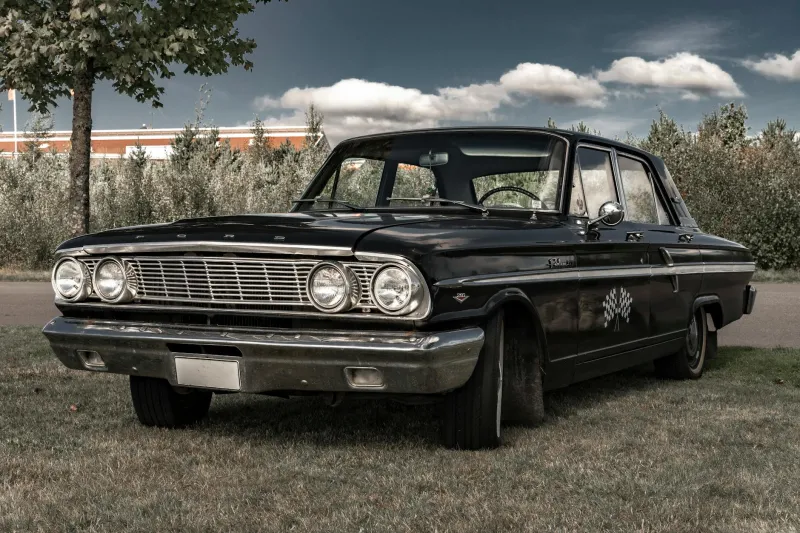
This was the Sunday drive — a uniquely American ritual that defined family leisure from the 1940s through the 1970s. Families would pile into their Buick or Oldsmobile and cruise the back roads for hours, windows down, kids fighting over who got to sit by the window, parents pointing out changes in the neighborhood or discussing the price of gas.
It wasn't about getting anywhere. It was about being together with nowhere else to be.
The Art of Going Nowhere
The Sunday drive embodied a different relationship with time — one that seems almost foreign today. Families would meander through suburban developments under construction, cruise past farms on the outskirts of town, or follow winding roads just to see where they led. The journey was the destination.
These drives operated on what we might call "analog time" — unscheduled, unoptimized, and unmeasured. There were no GPS coordinates to follow, no Yelp reviews to consult, no Instagram spots to hit. The only rule was that you'd eventually circle back home in time for dinner.
Cars became mobile living rooms where conversations happened naturally. Without phones, tablets, or individual entertainment systems, families had no choice but to engage with each other. Kids learned to read maps, spot license plates from distant states, and play word games that stretched across miles.
The Accidental Education
Sunday drives were geography lessons disguised as leisure. Children absorbed knowledge about their region — which roads connected to which towns, how urban areas gave way to farmland, where the good fishing spots were hidden. They developed spatial awareness and a sense of place that GPS navigation has largely replaced.
Parents used driving time to share stories about their own childhoods, point out historical landmarks, or explain how the landscape had changed since they were young. These weren't formal lessons but organic teaching moments that emerged from shared observation and curiosity.
The drives also served as informal therapy sessions. The act of moving forward together, eyes focused ahead rather than on each other, created a safe space for difficult conversations. Many families found it easier to discuss problems while driving than sitting around the dinner table.
Today's Hyper-Scheduled Sundays
Fast-forward to today, and the idea of spending three hours driving nowhere seems almost irresponsible. Modern families operate on packed schedules where every moment serves a purpose: soccer practice, music lessons, homework catch-up, meal prep for the week ahead.
When families do travel together, the journey is typically optimized for efficiency rather than experience. GPS calculates the fastest route. Streaming services provide individual entertainment. Frequent stops are planned around bathroom breaks and drive-thru meals rather than spontaneous exploration.
The modern family car has become a mobile office where parents take work calls while kids consume separate content on their devices. Physical proximity no longer guarantees shared experience.
The Cost of Constant Optimization
Somewhere in our pursuit of productivity, we lost the art of productive idleness. The Sunday drive represented time that wasn't optimized, scheduled, or measurably beneficial — and that was precisely its value. It created space for the kind of meandering conversations and random discoveries that don't happen when every minute is accounted for.
Child psychologists now recognize the importance of "unstructured time" for healthy development, but such time has become increasingly rare. Modern children often struggle with boredom because they've never learned to navigate unstimulated moments. The Sunday drive was practice for being comfortable with slowness.
The Intimacy of Shared Boredom
There was something uniquely bonding about being bored together. When entertainment wasn't provided, families created their own. They sang songs, told stories, played simple games, or simply sat in comfortable silence watching the world roll by.
These shared experiences of "nothing happening" became treasured memories precisely because they were unhurried and unforced. Without the pressure to create Instagram-worthy moments, families could simply exist together.
The Sunday drive also taught patience and delayed gratification. Children learned that not every moment needed to be stimulating, that sometimes the best part of an experience was the anticipation or the gentle rhythm of routine.
What We Lost When We Got Busy
The death of the Sunday drive reflects a broader cultural shift toward viewing time as a resource to be maximized rather than experienced. We've gained efficiency but lost the capacity for aimless togetherness.
Modern families often report feeling disconnected despite spending more time in cars together than previous generations. But time spent coordinating schedules, rushing between activities, and managing individual entertainment needs is fundamentally different from time spent simply being together.
The Radical Act of Going Nowhere
In an age of GPS navigation and optimized routes, the idea of driving without a destination has become almost radical. But perhaps that's exactly what modern families need — permission to waste time together, to be inefficient, to choose connection over productivity.
The Sunday drive wasn't just about the road. It was about creating space for the kind of relaxed intimacy that doesn't happen on schedule. It was about teaching children that sometimes the best moments come from having nowhere important to be.
In our rush to give our families everything, we may have forgotten to give them the one thing the Sunday drive provided: unhurried time together, with nowhere else to be and nothing else to do but enjoy the ride.