We Built Cities for Cars Instead of People—And Our Bodies Are Paying the Price
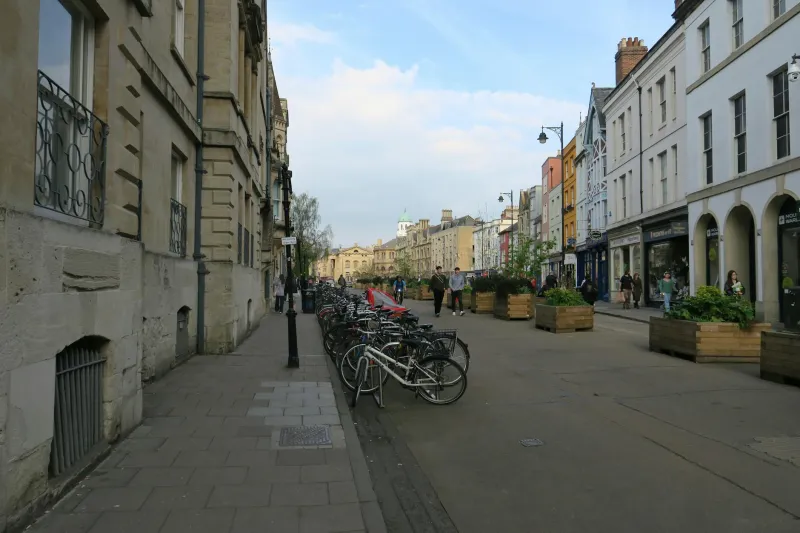
When Walking Was Just How You Got Around
In 1920, the American city was built for human feet. A shop owner walked to his store. Children walked to school in clusters, unsupervised, because the route was predictable and safe. Mothers walked to the market, the bank, the church, the library. Factory workers walked to the mill. On weekends, families walked to the park or the cinema or a neighbor's house.
This wasn't virtuous. It wasn't exercise. It was simply the structure of daily life. There was no choice involved. If you wanted groceries, you walked to the corner market. If you wanted to see a friend, you walked to their house. The average American in 1920 walked somewhere between 4 and 6 miles per day—not as a fitness goal, but as the default mode of existence.
The consequences of this constant, incidental movement were profound, though nobody called it "health outcomes" at the time. Obesity was rare. Diabetes was a disease you heard about occasionally, usually in whispered tones about someone's uncle. Heart disease existed, but it wasn't yet the leading cause of death in America. Cities were compact. Destinations were close. Movement was woven into the fabric of how you lived.
The Great Dispersal
Then came the car. And then came the deliberate choice to rebuild America around it.
The shift happened gradually, then suddenly. In 1920, there were 8 million cars in America. By 1930, there were 23 million. By 1950, highways were being planned. By 1956, the Interstate Highway System was authorized—a federal commitment to knit the entire nation together with car-centric infrastructure. The government was literally paying to make walking obsolete.
Zoning laws changed. Suburbs sprawled outward. A "good" neighborhood became one where your house was separated from shops, schools, and workplaces by miles. Parking lots replaced streetscapes. Strip malls replaced downtowns. The corner market became the distant supermarket, reachable only by car.
This wasn't accidental. Urban planners, transportation engineers, and politicians made specific choices. They chose to separate residential from commercial. They chose wide roads instead of walkable streets. They chose parking lots instead of mixed-use neighborhoods. They chose to make car ownership not a luxury but a necessity.
By 1970, the average American walked about 1.5 miles per day. By 2000, it was closer to 1 mile. Today, studies suggest the average American walks somewhere between 0.5 and 1.5 miles daily—a 90% reduction from a century ago.
The Body Keeps Score
What happened to our health? The data is stark.
Obesity rates in America in 1960 were around 13%. Today they're 42%. Childhood obesity, which was virtually nonexistent in 1950, now affects 20% of American children. Type 2 diabetes—the form strongly linked to lifestyle—was rare enough that it barely registered in public health statistics in 1960. Now it affects 37 million Americans, with another 96 million classified as prediabetic.
Heart disease, stroke, and metabolic syndrome have all followed similar trajectories. They're not caused solely by lack of walking, of course. Diet matters. Screen time matters. Work stress matters. But the epidemiological evidence is consistent: populations that walk more have better cardiovascular health, better weight management, better metabolic markers, and lower rates of chronic disease.
A 2019 study in JAMA found that people living in highly walkable neighborhoods had significantly lower rates of obesity and diabetes, even controlling for income and education. Another study in the American Journal of Preventive Medicine found that increasing neighborhood walkability by just 25% could reduce obesity rates by 5%—which, scaled nationally, would mean millions fewer obese Americans.
The mechanism is simple: walking 2 extra miles per day burns roughly 200 calories. That's 1,400 calories per week, or 72,000 calories per year—equivalent to 20 pounds of body weight. If your grandmother's daily walk to the market and back was 2 miles, and yours is 0, that's a 20-pound annual deficit right there, before considering diet or other factors.
The Invisible Architecture
Here's what's crucial: most Americans aren't sedentary because they're lazy. They're sedentary because the built environment makes movement inconvenient and sometimes unsafe.
Try walking to get groceries in most American suburbs. The grocery store is 3 miles away, on a road designed for cars going 45 mph, with no sidewalk. It's technically possible to walk, but it's unpleasant and feels dangerous. So you drive.
Try walking your child to school in a car-dependent neighborhood. The school is 2 miles away on a busy road. Other parents drive. There's no cluster of kids walking together. It feels unsafe, even if the actual risk is low. So you drive.
Try walking to a restaurant or a movie in a neighborhood built around parking lots. The theater is surrounded by asphalt, separated from residential areas by commercial strips. You could walk, but it would take 20 minutes through unpleasant, unsafe space. So you drive.
The genius of car-centric development is that it doesn't require people to choose sedentariness. It makes walking so inconvenient that driving becomes the only rational choice. The environment does the work of discouraging movement.
Conversely, studies of walkable neighborhoods show that people who live in them naturally move more—not because they're more virtuous or health-conscious, but because the environment makes movement the path of least resistance. A person living in a dense, walkable neighborhood might walk 3-4 miles per day just living their life, without ever stepping foot in a gym.
The Costs We Don't Count
The health consequences are staggering. Sedentary behavior is now classified as an independent risk factor for disease—meaning it's dangerous even if you're not overweight. Sitting for 8+ hours per day is associated with increased risk of heart disease, stroke, cancer, and early death.
The economic costs are equally staggering. Obesity-related medical costs in the US exceed $170 billion annually. Diabetes costs roughly $327 billion per year. These aren't just individual health problems—they're the predictable, measurable result of a century of infrastructure decisions.
And it's not evenly distributed. Lower-income neighborhoods are often more car-dependent and less walkable than wealthy neighborhoods. Residents of poor neighborhoods are more likely to be obese, more likely to have diabetes, more likely to die of heart disease. The built environment has become a mechanism of health inequality.
The Slow Reversal
Some cities are beginning to reverse course. Portland, Minneapolis, Denver, and a few others are investing in walkable neighborhoods, removing parking minimums, and rebuilding streets for people instead of cars. The data from these experiments is encouraging: neighborhoods that become more walkable see increases in physical activity, decreases in obesity, and measurable improvements in health outcomes.
But the reversal is slow, expensive, and politically contentious. For 70 years, we've been building infrastructure optimized for cars. Changing that requires not just policy shifts but actual physical reconstruction—tearing up parking lots, narrowing roads, planting trees, rebuilding neighborhoods from the ground up.
Meanwhile, the generations that grew up in car-dependent America are paying the price in their bodies. We've become a nation of drivers, passengers, and sitters—a radical shift from just a century ago. The consequences have been written into our epidemiology, our healthcare costs, and our daily experience of living in a landscape built for vehicles instead of people.
Your great-grandmother didn't need a gym membership. She lived in a walkable city. That wasn't virtue—it was just the default. We chose to change that default. And our health has reflected that choice ever since.