The Neighborhood Tailor Knew Your Measurements
In 1950, every neighborhood had its tailor shop — a cramped storefront where Mr. Rosenberg or Mrs. Chen could take in a waist, shorten sleeves, or completely restructure a jacket to fit your changing body. These weren't luxury services for the wealthy; they were essential infrastructure for ordinary families who expected their clothes to last decades.
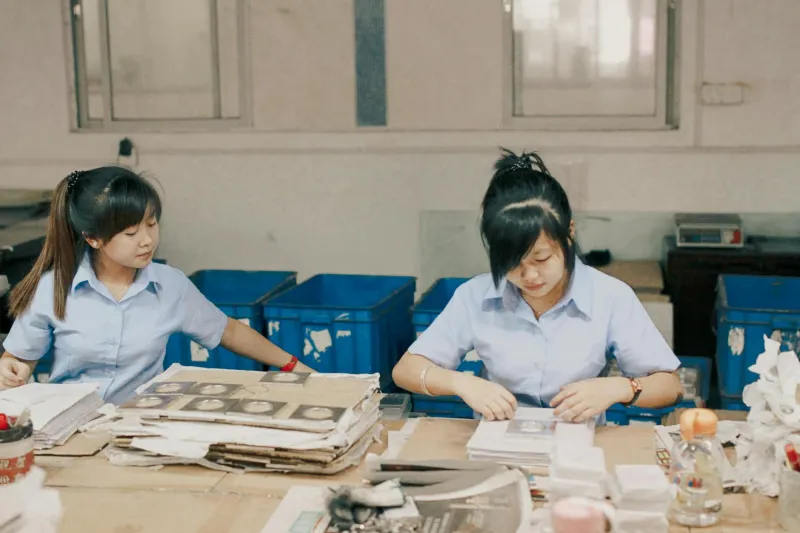
 Photo: Mrs. Chen, via brixtoy.com
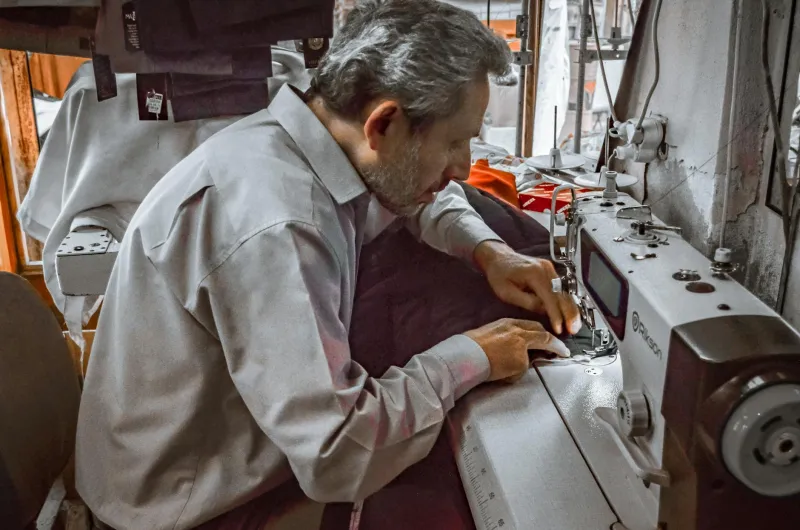
 Photo: Mr. Rosenberg, via pbs.twimg.com
A quality wool coat might cost the equivalent of $400 in today's money, but it would serve faithfully for twenty years or more. When the lining wore out, you replaced it. When fashion changed, you updated the lapels. When you gained weight, you let out the seams. Throwing away a perfectly good garment because of a broken zipper was unthinkable.
This wasn't just practicality — it was a completely different relationship with material goods. Clothes were investments that appreciated through care and adaptation rather than depreciating assets destined for disposal.
The Lost Art of Making Do
Every household had a sewing basket equipped for minor repairs. Mothers taught daughters (and occasionally sons) to darn socks, patch elbows, and replace buttons. These weren't quaint hobbies but essential life skills, like knowing how to change a tire or balance a checkbook.
The phrase "make do and mend" captured an entire philosophy of consumption. A torn seam meant fifteen minutes with a needle and thread, not a shopping trip. A missing button was a problem solved by the spare button packet sewn into the garment's seam, not an excuse to discard the entire shirt.
Darning — the intricate process of reweaving fabric to repair holes — was considered as normal as doing laundry. Families would gather around the radio in the evening, hands busy with mending work, extending the life of garments thread by thread.
Quality Over Quantity
The average American in 1950 owned far fewer clothes than today but wore each piece hundreds of times. A businessman might own three suits total, rotating them carefully and having them pressed and maintained by professionals. A housewife might have a dozen dresses that she mixed, matched, and accessorized to create different looks.
This scarcity bred creativity. Women became experts at refreshing outfits with scarves, jewelry, and careful coordination. Men learned to maintain their limited wardrobe meticulously, understanding that proper care could double or triple a garment's lifespan.
The construction quality justified this approach. Seams were reinforced, buttons were sewn through metal reinforcements, and fabrics were chosen for durability rather than just appearance. A dress shirt from 1950 contained twice as many stitches per inch as its modern equivalent.
The Economics of Durability
Here's where the numbers become staggering: Americans today buy five times more clothing than they did in 1980, but each garment lasts one-fifth as long. We're spending roughly the same percentage of our income on clothes but getting dramatically less value.
The average garment is worn only seven times before disposal. Compare that to previous generations, where a coat might be worn hundreds of times over decades. The hidden cost isn't just financial — it's environmental and psychological.
Fast fashion has trained us to view clothes as temporary, disposable items rather than durable goods. A $15 shirt that falls apart after three washes seems like a bargain until you calculate the replacement cost over time.
The Goodwill Delusion
Today's solution to unwanted clothing — donation to charity — masks the scale of our waste problem. Americans donate 3.8 billion pounds of clothing annually, but most of it ends up in landfills anyway. Only about 20% of donated clothing gets resold; the rest is too poor quality to find second owners.
This "charity washing" allows us to feel virtuous about our disposal habits while ignoring the underlying problem: we're producing and purchasing clothes designed to be temporary. The average donated garment has been worn so few times that it still has years of life left, but our throwaway culture treats minor imperfections as fatal flaws.
Previous generations would have been horrified by the idea of discarding clothes that were still functionally intact. A garment wasn't "worn out" until it had been mended multiple times and could no longer be repaired.
The Skills We Forgot
The decline of home economics education eliminated basic clothing care from the curriculum just as fast fashion made those skills seem obsolete. Today's adults often don't know how to sew on a button, let alone perform more complex repairs.
This learned helplessness extends beyond clothing. When we lose the ability to maintain and repair our possessions, we become dependent on replacement rather than restoration. The mindset that views a loose button as grounds for disposal eventually applies to electronics, furniture, and relationships.
The tailor shops that once anchored every neighborhood have largely disappeared, victims of changing economics and cultural attitudes. The few that remain serve primarily wealthy customers seeking luxury alterations rather than families maintaining everyday wardrobes.
The True Cost of Cheap
Fast fashion's promise of affordable style has hidden costs that previous generations understood intuitively. When clothes are designed to be disposable, the entire supply chain optimizes for speed and low price rather than quality and durability.
This race to the bottom has created working conditions in overseas factories that would have been unthinkable when clothes were made to last. When garments were expected to serve for decades, manufacturers had incentives to invest in quality materials and skilled construction.
The environmental impact is equally staggering. The fashion industry now produces more carbon emissions than international flights and maritime shipping combined. This pollution exists primarily to create clothes that will be worn a handful of times before disposal.
What We Can Learn from the Past
The solution isn't necessarily returning to 1950s wardrobes, but we can reclaim some of their wisdom. Buying fewer, higher-quality pieces and learning basic maintenance skills can dramatically reduce both costs and environmental impact.
Some young consumers are rediscovering the satisfaction of mending and altering clothes, treating repair as a creative act rather than a chore. The "visible mending" movement celebrates beautiful repairs that enhance rather than hide a garment's history.
The old approach to clothing wasn't just more sustainable — it was more personal. When you invested time and care in maintaining your clothes, they became part of your story rather than temporary costumes. Perhaps that's what we've really lost: the idea that our possessions should be partners in our lives, not just props in our Instagram feeds.
The needle and thread sitting unused in your junk drawer represent more than tools — they're a connection to a time when Americans knew how to make things last.