When Playgrounds Were Built to Break You — And Why Kids Were Better for It
The playground at Lincoln Elementary looked like a medieval torture device designed by engineers who'd never met a child. A thirty-foot metal slide baked in the sun until it could brand your legs. The merry-go-round spun fast enough to generate actual G-forces. Monkey bars stretched twelve feet above packed dirt, daring kids to fall. And fall they did — regularly, spectacularly, and without much fuss from anyone.
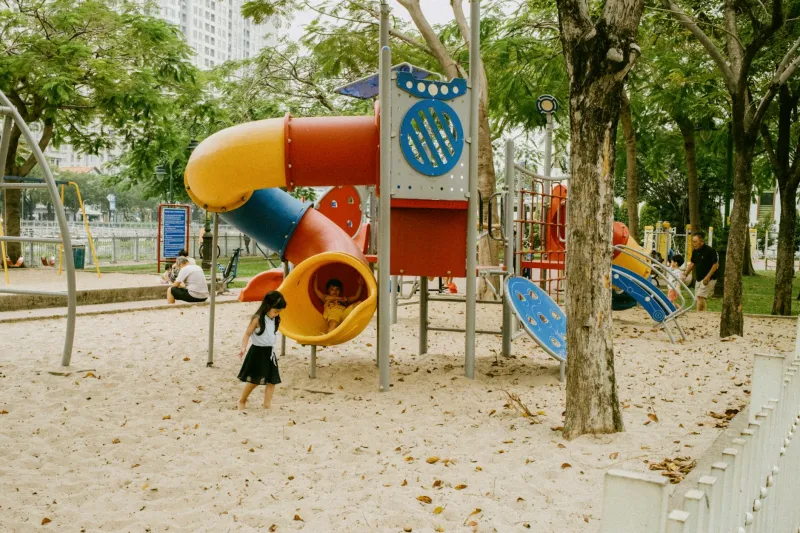
That was 1975. Today, that same playground features rounded plastic equipment no taller than eight feet, cushioned by two feet of rubber mulch, with every edge softened and every risk calculated away by safety engineers.
Welcome to the great playground transformation — where America decided that childhood should come with a warranty.
The Danger Zone We Called Fun
Playgrounds in the 1960s and 70s weren't just unsafe by today's standards — they were genuinely hazardous. The Consumer Product Safety Commission didn't start tracking playground injuries until 1980, but when they did, the numbers were staggering: 200,000 emergency room visits annually, with 15 deaths per year.
The equipment read like a greatest hits of childhood trauma. Seesaws launched kids into the stratosphere when their partner jumped off. Metal slides in summer heat reached temperatures that could literally burn skin. Merry-go-rounds became centrifuges, spinning until the weakest kid flew off like a ragdoll. Jungle gyms towered fifteen feet high with no safety barriers — just a long drop to unforgiving asphalt or dirt.
"We had this thing called the 'rocket ship' that was basically a twenty-foot metal cone you climbed up inside," recalls Mike Patterson, 52, from Phoenix. "Kids would push it back and forth while you were inside. I'm amazed nobody died."
The playground surfaces were equally unforgiving. Concrete, asphalt, and packed dirt provided zero cushioning for the inevitable falls. Sand was considered an upgrade, though it often hid broken glass and worse.
When Safety Became Sacred
The transformation began in the 1980s as liability lawsuits mounted and safety advocates pushed for change. The Consumer Product Safety Commission issued its first playground safety guidelines in 1981, followed by increasingly strict standards throughout the decade.
School districts, facing million-dollar lawsuits from playground injuries, began ripping out the old equipment. Insurance companies demanded compliance with new safety standards or threatened to drop coverage entirely. The message was clear: the days of playground Russian roulette were over.
Modern playgrounds are marvels of safety engineering. Equipment heights are capped at specific measurements based on age groups. Every surface is cushioned with rubber mulch, poured-in-place rubber, or engineered wood fiber. Sharp edges are eliminated. Entrapment hazards are calculated away. Fall zones are measured to the inch.
The numbers prove the transformation worked. Playground fatalities dropped to fewer than three per year. Emergency room visits, despite millions more kids using playgrounds, fell dramatically. By any objective measure, America's playgrounds are safer than they've ever been.
The Price of Perfect Safety
But something else happened during this safety revolution — something harder to measure than broken bones or emergency room visits. Many child development experts argue that we've engineered risk out of childhood at precisely the moment kids need to learn how to navigate it.
"Risk is not the enemy of children," says Dr. Peter Gray, research professor at Boston College and author of "Free to Learn." "Risk is how children learn about their own capabilities and limitations. When we remove all risk, we remove opportunities for growth."
The old playgrounds, for all their dangers, taught kids crucial life skills. They learned to assess risk before attempting the monkey bars. They developed spatial awareness navigating jungle gyms. They built confidence by conquering their fear of the tall slide. Most importantly, they learned that they could handle more than adults thought they could.
Today's playgrounds, designed by committees of safety experts, often feel sterile and unchallenging to kids. Equipment is so safe it's boring. The plastic slides are so short and slow that kids barely get a thrill. The climbing structures are so low that there's no sense of achievement in reaching the top.
The Helicopter Parent Generation
The playground transformation mirrors a broader shift in American parenting. The generation that grew up on dangerous playgrounds became parents determined to protect their children from every possible harm. What started as reasonable safety measures evolved into something approaching paranoia.
Parents who once roamed neighborhoods unsupervised until dark now schedule every minute of their children's lives. The idea of letting kids navigate real risk — even the controlled risk of a challenging playground — feels irresponsible to many modern parents.
"We've created a generation of kids who've never experienced genuine challenge," observes Lenore Skenazy, founder of the Free-Range Kids movement. "They reach college having never solved a problem their parents didn't anticipate and prevent."
What We Lost in Translation
The old playgrounds were undeniably dangerous, and nobody advocates returning to the days of third-degree burns from metal slides. But in our rush to eliminate every possible risk, we may have thrown out something valuable with the safety hazards.
Modern kids are physically safer but arguably less resilient. Anxiety disorders among children have skyrocketed. College counseling centers report unprecedented demand for mental health services. Some experts wonder if our risk-averse culture has left kids unprepared for life's inevitable challenges.
The question isn't whether playgrounds should be safe — of course they should. The question is whether we've defined safety so narrowly that we've eliminated the very experiences that help children grow into confident, capable adults.
As we look back at those death-trap playgrounds of decades past, maybe the lesson isn't that they were perfect, but that some amount of manageable risk might be exactly what childhood requires. After all, the goal isn't to protect kids from every possible harm — it's to raise them into adults who can handle whatever harm comes their way.
The playgrounds changed. The question is whether we changed for the better.