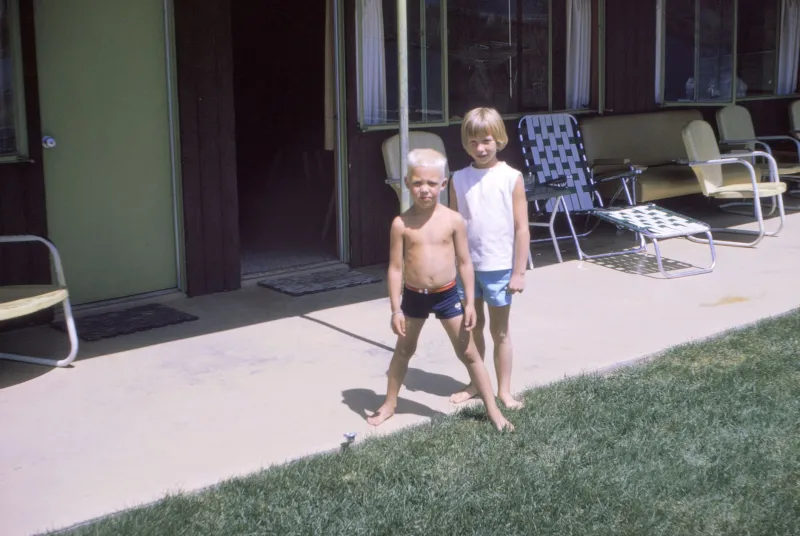
Gone for the Summer — When Leaving Home Actually Meant Leaving
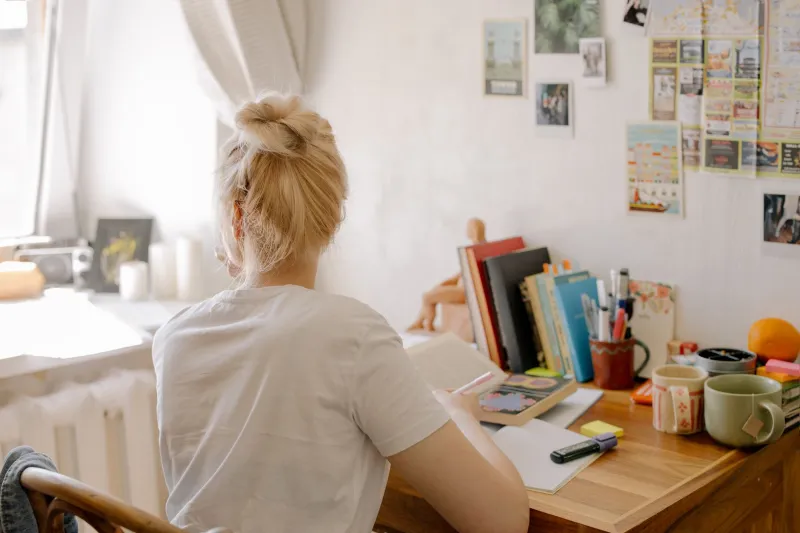
In the fall of 1967, a 17-year-old from rural Ohio packed a single suitcase, boarded a Greyhound bus, and arrived at a state university 300 miles from home. She called her parents from a payphone to say she'd arrived safely. Then she didn't speak to them again for six weeks.
Not because anything was wrong. Because that was simply how it worked.
Long-distance calls were expensive — a few minutes could eat through a week's spending money. Letters took days each way. The emotional and geographic distance between that girl and her family was, for practical purposes, vast. She was on her own in a way that today's college freshman, FaceTiming their parents from the parking lot before move-in is even finished, will likely never experience.
And something important happened in that distance.
The Age of True Departure
For most of the 20th century, leaving home was a genuine rupture. Whether you were heading to college, taking a job in another city, going off to summer camp, or joining the military, departure meant a real and sustained separation from everything familiar. You couldn't text your mom a photo of your cafeteria dinner. You couldn't scroll through your high school friends' Instagram stories from your freshman dorm. You couldn't ask your dad to help troubleshoot your landlord situation over a video call.
You were, in the most literal sense, gone.
Camp letters from the mid-20th century are fascinating artifacts. Kids wrote home about homesickness in raw, unfiltered terms — describing the specific ache of missing a parent's voice or the smell of their own bedroom — because the only outlet was the page. Parents wrote back with equal tenderness, tucking in newspaper clippings or a stick of gum. The wait between letters was agonizing and, in retrospect, formative.
College students called home once a week, maybe twice, from a shared hallway phone. Conversations were brief by necessity. Between those calls, they built their lives from scratch — navigating conflict with roommates, figuring out the dining hall, making friends through the slow and awkward process of actually being in the same room as people and deciding to like them.
The distance forced a kind of becoming.
The Phone That Collapsed the Miles
The mobile phone changed everything incrementally, and then all at once.
Through the early 2000s, even cell phones were limited enough that going away still meant going away — just with slightly cheaper long-distance rates. But by the mid-2000s, unlimited calling plans had arrived. By 2010, smartphones with cameras and video calling had transformed the experience entirely. By the 2020s, a kid at summer camp in Vermont could show their parents their cabin, their bunkmate, and their lunch — in real time — before the first full day was over.
Parents and children are now in more continuous contact across distance than at any point in human history. A 2019 survey found that the average college student communicates with their parents 13 times per week. Thirteen. That's nearly twice a day, across every format — texts, calls, snaps, FaceTimes. Many students report texting a parent from inside a lecture hall when something confuses them, or calling home the moment a social situation goes sideways.
This isn't unique to college. Summer camps have largely abandoned their old no-phone policies under pressure from parents who simply could not tolerate the silence. Some camps now offer daily photo updates and parent portals where families can track their child's activities in real time. The mystery — and the magic — of not knowing exactly what your kid is doing on a Tuesday afternoon has been almost entirely eliminated.
What Gets Lost in the Signal
Psychologists who study emerging adulthood have been watching this shift with growing concern — not about the technology itself, but about what the constant connection prevents.
The process of leaving home and navigating genuine separation has historically done something important for young people. It forces what researchers call "individuation" — the psychological work of becoming a separate person with a separate identity. When you can't immediately call your parents every time something goes wrong, you develop your own judgment. You make decisions and live with them. You discover what you actually think and feel, independent of the people who raised you.
When that separation is available but optional — when the comfort of home is always one swipe away — many young people simply don't go through it. They remain, in some essential psychological sense, more tethered than their circumstances require. Therapists on college campuses have noted an increase in students who struggle to tolerate uncertainty, make independent decisions, or manage even moderate stress without parental input. Whether constant connectivity is a cause, a symptom, or both is still being debated. But the correlation is hard to ignore.
There's also something to be said for the specific experience of homesickness itself. Not the crushing, clinical variety, but the ordinary ache of missing home — which, when you can't immediately cure it with a FaceTime call, tends to teach you something. It teaches you that you can survive the missing. That the feeling passes. That you are capable of being okay in a place that isn't home, with people who aren't your family, in a life that is entirely your own construction.
That's not a small lesson. It might be one of the most important ones growing up has to offer.
The Reunion That Used to Mean Something
There's one more thing worth noting about the era of true departure: the reunion.
When a kid came home from three months at summer camp in 1965, or a college freshman returned for Thanksgiving after a full semester away, the reunion was an event. There was news to share that hadn't already been shared. There were stories that hadn't been told. There was a person, visibly changed by time and experience, standing in the doorway — and the people waiting for them had changed too, in the space between.
Today, by the time a student walks through the door for Thanksgiving, their parents have already seen their Halloween costume on Instagram, watched three videos of their intramural soccer game, and received a play-by-play of the midterm they thought went badly. The reunion is warm, but it isn't quite a revelation.
We haven't lost the love. We've just compressed the distance until it barely registers — and with it, some of the most quietly powerful experiences that growing up used to provide.