The Summer That Belonged to Nobody — And Why Kids Were Better For It
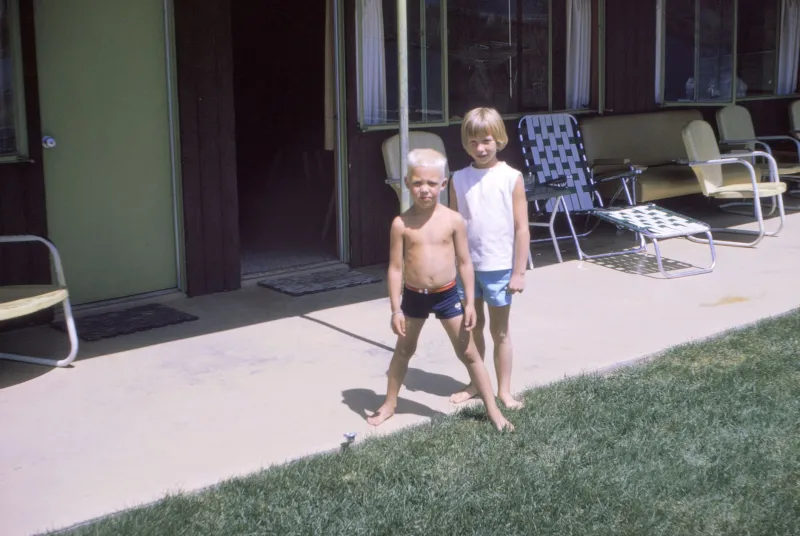
Ask anyone who grew up in America before the 1990s what they did during summer vacation and you'll get some version of the same answer: I don't know. Stuff. Outside. Maybe they rode bikes until the streetlights came on. Maybe they caught frogs at the creek behind the subdivision. Maybe they spent three full weeks in a state of magnificent, productive boredom that nobody scheduled and nobody supervised.
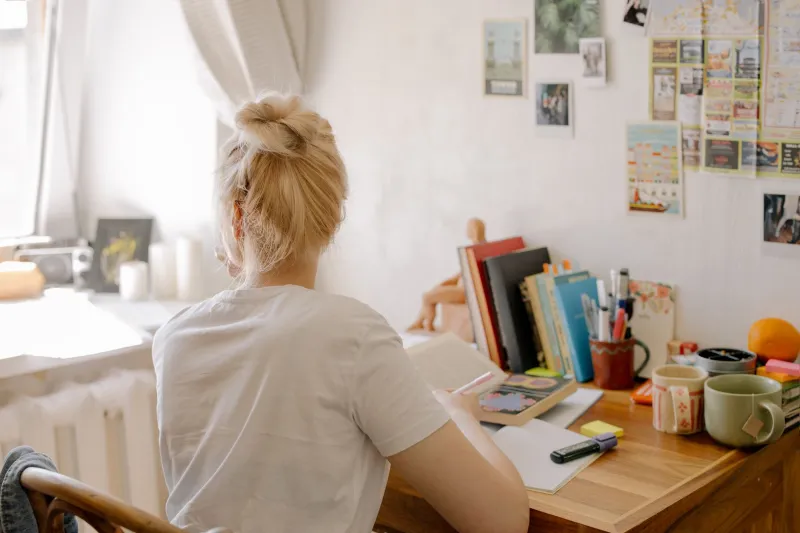
Now ask a parent of a 10-year-old today what their kid's summer looks like. They'll pull out their phone and show you a calendar.
The Unscheduled Summer
For most of the 20th century, summer vacation was exactly what the name implied: a vacation. Schools closed in June, and for the next ten weeks, kids largely disappeared into the neighborhood. Parents worked. Older siblings kept a loose eye on younger ones. The rules were minimal — be home for dinner, don't break anything expensive, don't drown.
Pickup baseball games organized themselves on empty lots. Kids built things out of scrap wood and broke them and built them again. Boredom arrived reliably around Week Three and then, just as reliably, transformed into something — a club, a game, a project, a story. Nobody called it "developing executive function" or "fostering intrinsic motivation." It was just what happened when you left kids alone with time and space.
Summer camp existed, but it wasn't the intensive, resume-building enterprise it has become. A lot of kids never went at all. Those who did went to sleep-away camps in the woods where the main activities were swimming, campfires, and learning to tolerate a bunkmate who snored. You wrote letters home. Your parents wrote back. Everyone survived.
The Great Calendar Invasion
The shift didn't happen overnight. It crept in gradually, accelerating through the 1990s and hitting full stride in the 2000s.
A few forces drove it. Dual-income households became the norm, which meant parents needed somewhere for kids to be during working hours. Fair enough. But alongside that practical reality came something else: a rising cultural anxiety about what unstructured time might cost a child's future. The college admissions arms race was intensifying. Parenting philosophies that emphasized enrichment and achievement were gaining traction. And a new fear — amplified by 24-hour news — made letting kids roam the neighborhood feel less like freedom and more like negligence.
So summer filled up. Academic enrichment camps. STEM programs. Sports clinics. Music intensives. Coding courses for eight-year-olds. Language immersion. Leadership retreats. By the 2010s, the concept of a "competitive summer" had taken hold in many middle and upper-middle-class communities, where the question wasn't whether your kid was doing something — it was whether what they were doing would look good on a future application.
Today, American families spend an estimated $50 billion annually on summer activities for children. The average camp costs anywhere from $200 to over $1,000 per week. And the scheduling often begins in January — because the good programs fill up fast.
What the Research Actually Says
Here's where it gets uncomfortable for parents who've color-coded their child's July: the research on unstructured play is pretty consistent, and it doesn't favor the packed calendar.
Psychologists and child development researchers have spent decades documenting the benefits of free, child-directed play. It builds creativity, problem-solving ability, and emotional regulation. It teaches kids to negotiate, to tolerate frustration, to invent their own solutions when no adult is around to provide one. Stuart Brown, a psychiatrist who has studied play for decades, has called free play "a biological necessity" — not a luxury or a reward, but a developmental requirement.
Boredom, too, has been quietly rehabilitated by researchers. Studies suggest that children who are allowed to be bored develop stronger imaginations and greater capacity for self-direction. Boredom is, in a sense, the incubator of creativity. When there's nothing to do, the brain starts making something.
Over-scheduled kids, by contrast, show higher rates of anxiety and lower capacity for self-directed activity. When every hour has been assigned a purpose by an adult, children lose practice in the art of figuring out their own purposes. Some researchers have begun using the phrase "play deficit" to describe what they're observing in clinics — kids who genuinely don't know how to play without instruction.
The Safety Paradox
One of the most striking shifts in the last 50 years is that American children are, by almost every statistical measure, safer than they've ever been. Crime rates have fallen dramatically since the early 1990s. Traffic fatalities are down. The actual risks that parents fear most have, in many cases, decreased significantly.
And yet parental anxiety about children's safety has risen. The gap between perceived risk and actual risk has grown wide enough to reshape childhood entirely. Kids who would have spent their summers freely roaming in 1975 are now supervised at a level their grandparents would have found baffling — and perhaps a little sad.
This isn't a judgment on parents. It's a reflection of a culture that has changed around them. When every other family on the block is driving their kid to a structured activity, letting yours loose with a bike and no plan feels like a statement — and not necessarily a comfortable one.
What a Summer Used to Teach
The unscheduled summer of mid-century America wasn't just leisure. It was, in its own low-key way, a training ground. Kids learned to manage long stretches of time. They learned to tolerate discomfort and uncertainty. They figured out how to get along with other kids without a referee. They discovered what they actually liked — not what their parents had signed them up for.
Some of those kids grew up to be remarkably resourceful adults. Not because of the camps they attended or the programs they completed, but because they had ten uninterrupted weeks each year to figure themselves out.
That's not nothing. In fact, it might be everything.