When the Whole Block Was Your Backyard — And Nobody Had to Schedule It
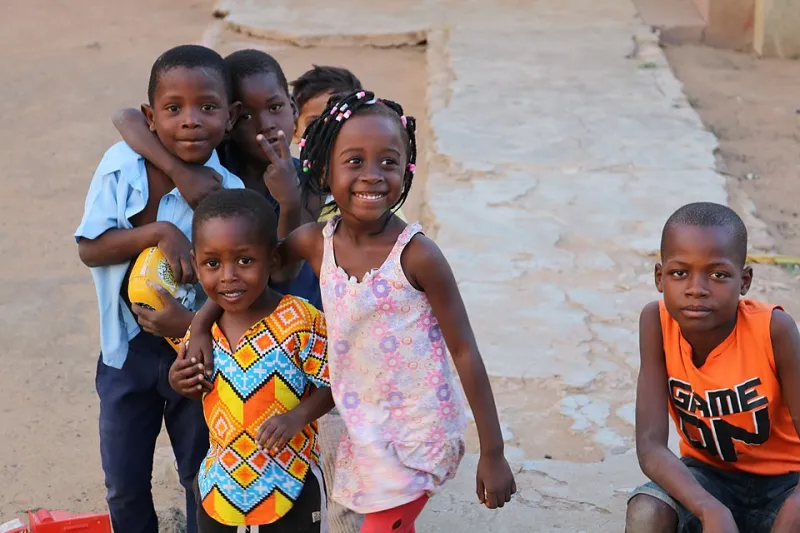
Photo: Bram Berkelmans, CC BY-SA 4.0, via Wikimedia Commons
Ask almost anyone over forty about their childhood summers, and a particular picture tends to emerge. A loose group of neighborhood kids. Bikes left in someone's yard. Arguments settled without adult intervention. Games that had no official rules and changed every time. The understanding, held by children and parents alike, that the neighborhood was a safe enough place to be in for hours at a time, unsupervised, without anyone checking in.
That world didn't disappear because something catastrophic happened to it. It faded gradually, quietly, and with the best of intentions. And in its place, something quite different has taken shape — a childhood that's safer in some measurable ways, and lonelier in others that are harder to quantify.
The Unscheduled Afternoon
In the 1960s and 1970s, the default mode of childhood after school and on weekends was unstructured outdoor play. Kids organized themselves. They negotiated the rules of pickup baseball games, managed conflicts over who was "it," and figured out how to include — or exclude — other kids without a parent moderating the process. It was messy, occasionally unkind, and developmentally rich in ways that researchers are still documenting.
The geography of childhood was expansive. Studies of children's roaming range — how far from home kids were permitted to travel independently — show a dramatic contraction over the past fifty years. In the 1970s, it was common for children as young as seven or eight to range a mile or more from home on their own. By the 2000s, that range had shrunk to a few hundred feet for many kids. Today, children in some suburban neighborhoods report rarely leaving their own yards without an adult present.
The neighborhood as a social ecosystem — where kids of different ages mixed freely, where older children mentored younger ones, where relationships formed and broke and reformed over long stretches of uninterrupted time — has largely ceased to function in that organic way.
How It Changed, and Why
The shift wasn't caused by any single factor. A cluster of forces converged over several decades to reshape the landscape of American childhood.
Media coverage of child abductions intensified in the 1980s, creating a perception of danger that statistics have never fully supported. The number of stranger abductions in the US is, and largely has been, extremely low relative to the fears it generated. But perception shapes behavior, and the cultural message absorbed by parents during that period was clear: the outside world is not safe for unsupervised children.
At the same time, liability culture expanded. Playgrounds were redesigned to eliminate risk, and in some cases eliminated altogether. Schools curtailed recess. Parents who allowed children to walk to school or play outside alone began to attract attention — and in some documented cases, legal scrutiny — in ways that would have been unthinkable a generation earlier.
Suburban design played a role too. Neighborhoods built around cul-de-sacs and without sidewalks, where houses face garages rather than streets, don't naturally generate the kind of foot traffic and casual outdoor presence that made old-school neighborhood play possible. You can't have spontaneous block games if there's no block culture to begin with.
And then screens arrived. First video games, then the internet, then smartphones — each offering an indoor alternative to outdoor social life that was stimulating, immediately rewarding, and required no negotiation with other children.
What the Research Is Telling Us
Developmental psychologists have been sounding alarms about the consequences of this shift for over a decade. The work of researchers like Peter Gray at Boston College has documented the link between declining unstructured play and rising rates of anxiety, depression, and what Gray calls a diminished "sense of control" in children — the feeling that they have agency over their own lives.
 Photo: Boston College, via images.forbes.com
 Photo: Peter Gray, via substackcdn.com
Children who navigate conflict, boredom, and social complexity on their own — without an adult stepping in to resolve every difficulty — develop resilience in ways that structured, supervised activities don't easily replicate. The argument isn't that supervision is bad. It's that constant supervision removes the learning opportunities that come from kids working things out themselves.
The data on youth loneliness has become particularly striking. A 2023 report from the U.S. Surgeon General identified loneliness and social isolation as a public health crisis, with young people among the most affected demographics. Teens today report having fewer close friendships than teens in previous decades. They spend more hours in social interaction — much of it online — but report feeling more disconnected. The quantity of contact has gone up. The quality, by their own account, has often gone down.
 Photo: U.S. Surgeon General, via img-s-msn-com.akamaized.net
Safety That Became Its Own Kind of Harm
Here's the uncomfortable tension at the center of this story: many of the changes that reshaped children's social lives were made by parents who were trying to do right by their kids. The impulse to protect is not wrong. The fear, even if statistically overstated, was genuinely felt.
But somewhere along the way, the definition of a safe childhood quietly shifted from "children who can handle the world" to "children who are never exposed to it unsupervised." Those are very different things.
A child who spends her afternoons in back-to-back structured activities — soccer practice, tutoring, music lessons — is busy, supervised, and building skills. She's also not learning how to be bored, how to initiate play, how to manage a falling-out with a friend without an adult facilitating the resolution. Those are skills too, and they don't show up on any schedule.
The Block That Used to Know Your Name
There's something worth grieving in the loss of the neighborhood as a children's social world. Not in a sentimental, rose-colored way — kids got hurt, conflicts went unresolved, some children were left out more than was fair. But the unstructured, self-organized outdoor childhood produced something that's genuinely hard to replicate: a sense of belonging to a place, and to a group of peers, that didn't require parental coordination to maintain.
The streetlights-coming-on rule was never really about the streetlights. It was about the understanding that children were capable of being out in the world — their small, neighborhood-sized world — and finding their way back home.