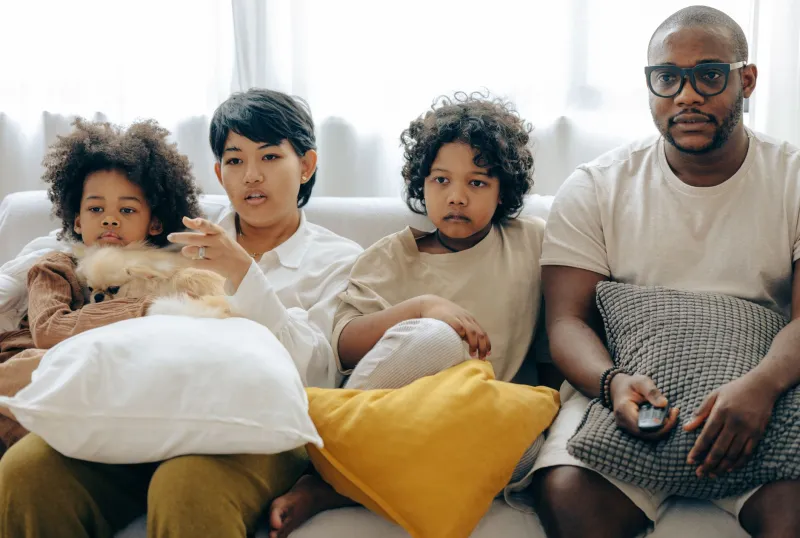
One Speaker, Seven People, and the Show Nobody Watched Alone — The Ritual We Quietly Abandoned
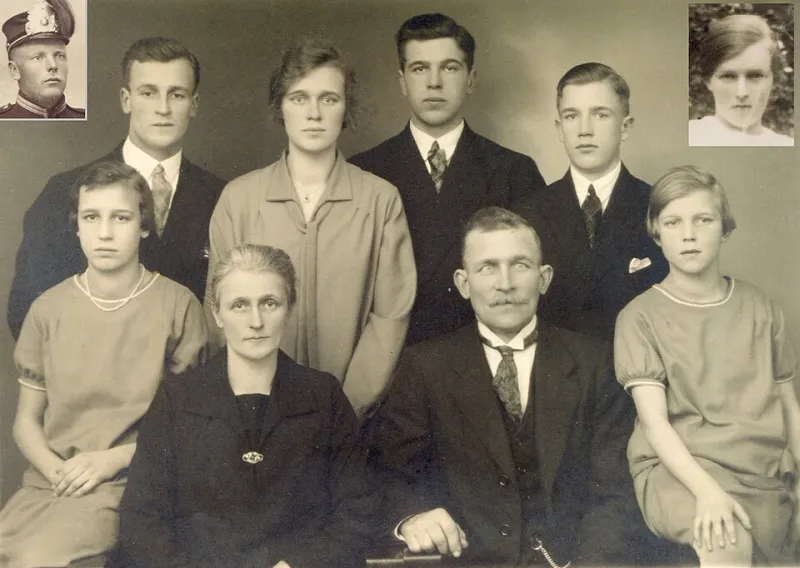
Photo: N. Aug. Hedblom of Falun Korsnäs (left insert) & unknown family assistants, Demitz Archives acquired by FamSAC, Public domain, via Wikimedia Commons
Somewhere in a box in your grandparents' attic, or maybe in an old photograph you've half-forgotten, there's an image that captures something we've almost entirely lost. A living room. A family gathered around a large wooden console — the kind that looks more like furniture than electronics. Everyone facing the same direction. Everyone quiet. Everyone together.
That was the household radio. And for a significant stretch of American history, it wasn't just a device. It was the organizing principle of evenings at home.
The Box That Held the Room Together
From the 1930s through the early 1950s, radio was the dominant mass medium in the United States. Families scheduled their evenings around it the way later generations would schedule theirs around prime-time television. Programs like The Jack Benny Program, Fibber McGee and Molly, and The Lone Ranger weren't background noise — they were events. You sat down, you listened, and you experienced them together.
 Photo: The Lone Ranger, via www.otrwesterns.com
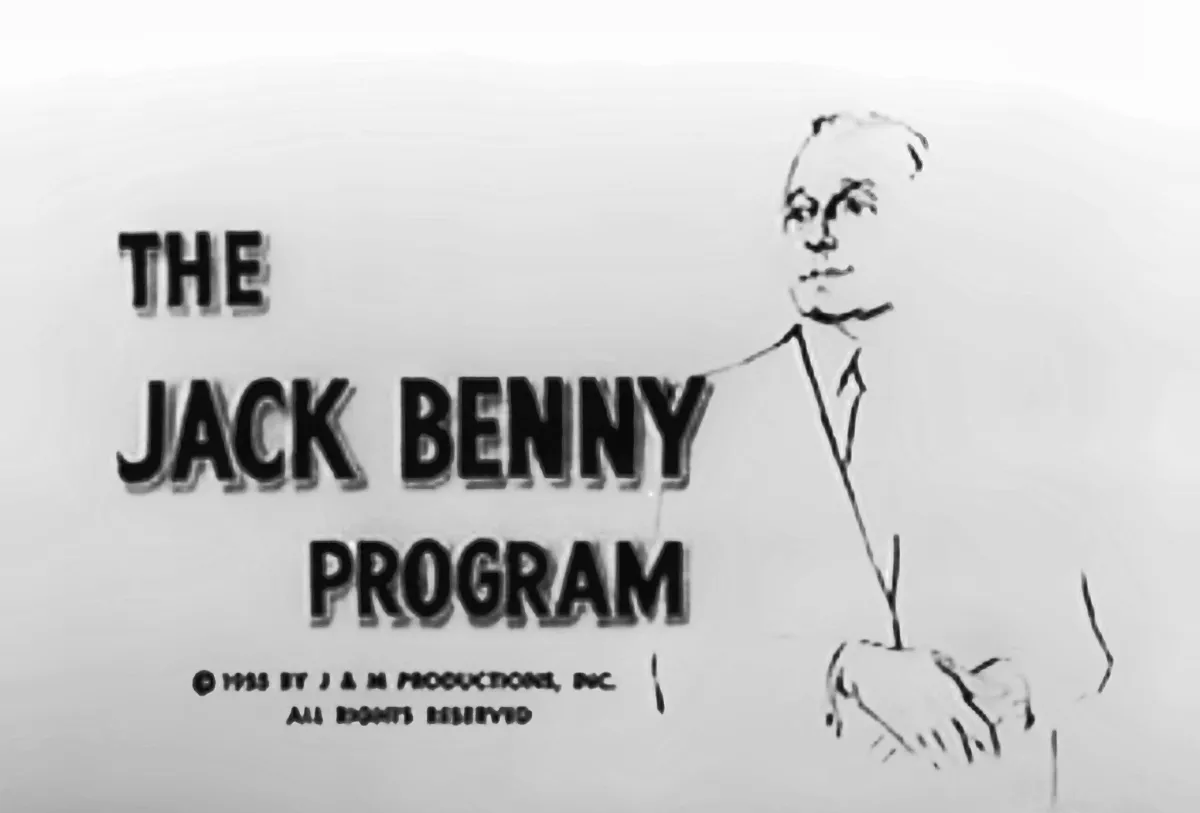 Photo: The Jack Benny Program, via www.metacritic.com
The shared nature of this was almost entirely taken for granted at the time, which is part of why its disappearance has gone so underexamined. When a family gathered around a radio broadcast in 1942, they weren't just consuming entertainment. They were synchronizing. They laughed at the same moment. They went quiet at the same moment. They reacted to news — war updates, presidential addresses, championship fights — in real time, side by side, in the same emotional space.
Children and grandparents sat in the same room absorbing the same content. That overlap created conversation, shared reference points, and a kind of low-key intimacy that required no planning or intention. It just happened, because there was only one speaker and it was in the living room.
Television Kept Some of It Alive — For a While
When television arrived and gradually overtook radio as the family medium through the 1950s and 60s, it preserved the essential structure of shared viewing. The screen was still in one room. There was still, for most families, one television. Households still gathered. The ritual migrated from radio console to TV set, but the communal logic remained largely intact.
Even into the 1980s and early 1990s, water-cooler culture was built on this shared experience. When the finale of M*A*S*H aired in 1983, 106 million Americans watched it at the same time. Not because they coordinated — but because there was only one way to see it, and that way was live, together, or not at all. That shared viewing created a kind of cultural common ground that's increasingly difficult to replicate.
The erosion was gradual. A second TV in the bedroom. Cable expanding the channel menu from a handful to hundreds. DVD players decoupling viewing from broadcast schedules. Each step was a small loosening of the shared-media thread.
The Great Fragmentation
Today's media landscape looks nothing like the one that radio built. Streaming platforms offer tens of millions of titles. Algorithmic recommendation engines are specifically designed to serve each individual user a personalized feed — meaning no two people in the same household are likely to be steered toward the same content. Podcasts, YouTube channels, TikTok feeds, Spotify playlists — all of it flows through personal devices, into personal earbuds, in personal bubbles.
A family of four in 2024 might be in the same house on a Friday evening with four entirely separate media experiences happening simultaneously — one person watching a documentary on a laptop, another streaming a reality show on a tablet, a teenager with headphones on consuming short-form video, a parent listening to a podcast while doing dishes. Together, and completely apart.
This isn't a moral failure. It's the logical outcome of giving people exactly what they want, when they want it, in the format they prefer. Personalization is genuinely valuable. But it's worth asking what it quietly replaced.
What Shared Media Actually Did for Families
Researchers who study family dynamics and adolescent development have begun paying closer attention to what's sometimes called "co-viewing" — the act of watching or listening to media together. The findings are fairly consistent: shared media experiences create natural entry points for conversation. They give family members, especially parents and teenagers, something neutral to react to together. They generate shared references that become part of a family's internal language.
The radio era produced this almost automatically. You couldn't opt out of the shared experience because there was no alternative. Now opting out is the default, and opting in requires deliberate effort — a family movie night you have to schedule, a show you have to convince everyone to watch together, a playlist someone has to curate and agree on.
There's also something worth noting about the passive togetherness that old media enabled. Sitting in the same room listening to the same program didn't require anyone to be particularly social or emotionally available. You could be tired, you could be quiet, and you were still present — in the same physical and experiential space as the people you lived with. That kind of low-demand togetherness is harder to manufacture in a world where every media experience is actively personalized and privately consumed.
The Sound That's Missing
Nobody is suggesting we should go back to a world with one radio and no alternatives. The freedom of personalized media is real, and the content available today is extraordinary by any historical measure.
But there's something worth acknowledging in the shift. The household radio wasn't just a piece of technology — it was an accidental architect of family connection. It gathered people without asking them to try. It gave them something in common without requiring them to negotiate.
When we handed everyone their own screen and their own feed, we gained almost unlimited choice. What we may have quietly traded away is the unremarkable, undervalued experience of simply being in the same room, hearing the same thing, at the same time.
 Photo: MASH, via static1.srcdn.com