From Months of Uncertainty to Minutes of Clarity: How American Medicine Learned to Answer Faster
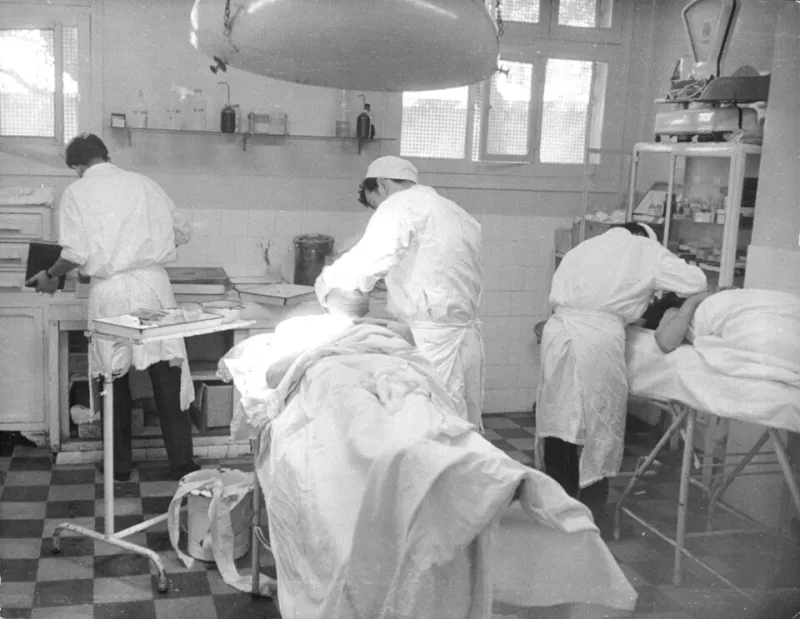
Photo: Unknown photographer, Public domain, via Wikimedia Commons
Imagine sitting with a lump you've just discovered, a cough that won't quit, or a fever that keeps climbing — and being told to come back in three weeks. That was the reality for millions of Americans in the mid-twentieth century. Not because doctors didn't care. Not because medicine was primitive. But because the tools simply didn't exist to move any faster.
The gap between then and now is almost impossible to overstate.
The Long Wait That Defined an Era
In the 1940s, '50s, and even into the '60s, a trip to the doctor was rarely the beginning of an answer. It was the beginning of a process — one that could stretch across months and require more patience than most frightened patients had to give.
Blood work, when it was ordered at all, had to be sent to a centralized lab. Results came back by mail or phone, often days later. X-rays required specialized equipment that wasn't available in every town, and reading them accurately meant waiting for a radiologist who might be based in a city hours away. Biopsies were invasive procedures followed by long silences. Cultures for bacterial infections took 48 to 72 hours minimum — and that assumed the sample was handled correctly every step of the way.
For a patient in rural America, this process was even slower. You might see your local GP, get referred to a specialist in the nearest city, wait weeks for that appointment, then wait again for test results to travel back through the chain. By the time a diagnosis arrived, the illness had often progressed significantly.
The human cost was staggering. Cancers caught at stage three that might have been stage one with faster detection. Bacterial infections that turned septic while families waited by the phone. Thyroid conditions, diabetes, and heart disease that went unmanaged for years because the diagnostic picture took so long to develop.
And through all of it, patients simply had to sit with not knowing.
What Changed Everything
The transformation didn't happen overnight. It came in waves — each one faster than the last.
The development of automated blood analyzers in the 1970s was one of the first major shifts. Suddenly, a single machine could process dozens of tests simultaneously, cutting turnaround times from days to hours. The 1980s brought point-of-care testing — devices small enough to sit on a countertop that could deliver results in a clinical setting without shipping samples anywhere.
Then came the digital revolution. Electronic medical records allowed results to be transmitted instantly. Imaging technology evolved so rapidly that a CT scan taken at 9 a.m. could be read by a radiologist in another state by 9:30. Molecular diagnostics made it possible to identify specific pathogens at a genetic level in hours rather than days.
And then, almost without warning, testing moved into the home entirely.
Answers Before Breakfast
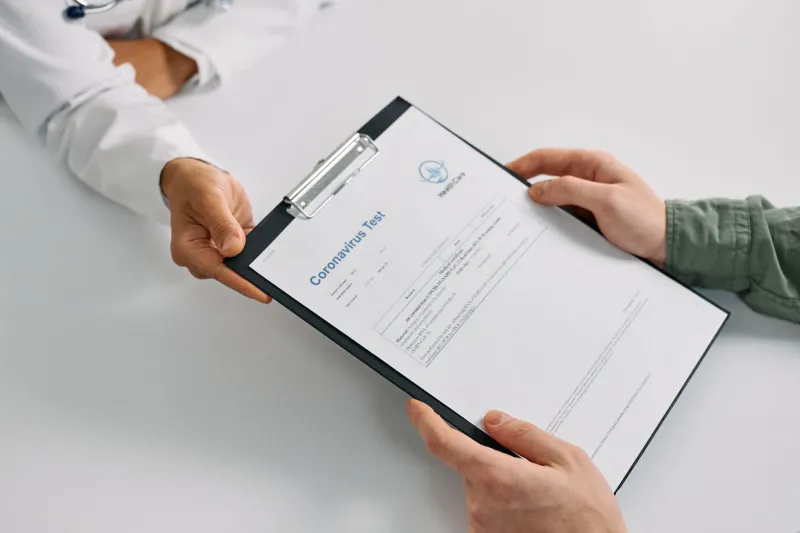
Today, Americans can test for COVID-19, strep throat, flu, UTIs, pregnancy, HIV, and a growing list of other conditions without ever leaving the house. Pharmacy shelves are lined with rapid test kits. Telehealth platforms connect patients with physicians in minutes. Wearable devices monitor heart rhythms continuously, flagging irregularities in real time and sending alerts directly to cardiologists.
Laboratory companies like Quest and LabCorp now offer consumer-facing portals where patients can order their own blood panels, walk into a draw center with no appointment, and see results on their phone within 24 hours. Some urgent care centers advertise same-visit strep, flu, and mono results as a standard feature.
The contrast is almost surreal. A condition that once required a weeks-long diagnostic odyssey can now be confirmed during a lunch break.
For certain illnesses, this speed is genuinely life-saving. Early-stage cancer detection rates have improved dramatically. Sepsis protocols in emergency rooms now hinge on rapid lab turnarounds measured in minutes, not hours. The faster the answer, the faster treatment begins — and in medicine, time is almost always the variable that matters most.
The Conversation That Got Left Behind
But something shifted in the exam room when the machines got faster.
In the era of slow diagnostics, a doctor had to rely more heavily on conversation. The physical exam was thorough because it was often the most reliable tool available. Questions were detailed. Patients described their symptoms at length, and physicians listened carefully — not just because they were compassionate, but because the information genuinely guided their thinking.
That extended exchange did something else, too. It made patients feel heard. The process of being asked, examined, and explained to was part of the care itself. The wait for results, frustrating as it was, came with a relationship. Your doctor called you personally when the lab rang. They walked you through what the numbers meant. They sat with you in the uncertainty.
Today, many Americans receive their lab results through a patient portal notification before their doctor has even reviewed them. A number appears on a screen — flagged red if it's outside range — with no context, no explanation, and no one to call at 10 p.m. when the anxiety kicks in. The speed is remarkable. The loneliness of it is something else entirely.
The File Stays Open
American diagnostics have never been more powerful, more accessible, or more precise. The tools available today would have looked like science fiction to a physician practicing in 1955. Lives are being saved at a rate and consistency that earlier generations could only dream about.
But as the machines got faster, the moments of human connection got shorter. The appointment shrank. The conversation narrowed. And somewhere in the efficiency, the experience of being a patient — really being seen, really being heard — got a little harder to find.
Speed is a gift. But it turns out that what people needed, alongside the answer, was someone to help them understand what it meant.