The Half-Day That Built the Neighborhood: What We Gave Up When Shopping Became a Click
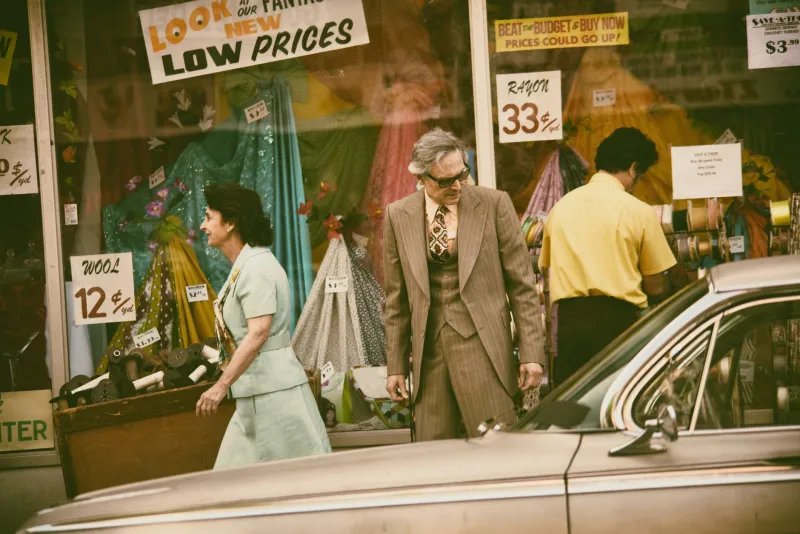
Sometime around 1974, on a Saturday morning in almost any American town, a version of the same scene was playing out on main streets from Ohio to Oregon. Dad was at the hardware store, debating sandpaper grit with the guy behind the counter who'd been there since before Kennedy. Mom was at the pharmacy, picking up a prescription and catching up with the woman from two streets over. The kids were sitting on the bench outside the shoe repair shop, watching the cobbler work and pretending not to be bored.
Nobody called it a ritual. It was just Saturday. It was just what you did.
The Errand Run as Social Architecture
The Saturday morning errand circuit of mid-century America wasn't simply about acquiring goods. It was a structured encounter with community — a half-day expedition that created dozens of small human interactions woven into the fabric of getting things done.
Think about the stops. The hardware store, where the staff actually knew the difference between a toggle bolt and a masonry anchor and would talk you through your project without consulting an algorithm. The grocery, where you might run into three people you knew before you reached the produce section. The pharmacy, where the pharmacist remembered your family's medications and occasionally flagged a potential interaction your doctor had missed. The shoe repair shop. The dry cleaner. The five-and-dime.
Each stop was a transaction, yes. But it was also a check-in. A brief but real connection to the human infrastructure of a place. You learned things — who was sick, whose kid had just gotten into college, which neighbor needed help with something. You were seen. You were known.
The economics of it were different too. Most of those businesses were locally owned. The money you spent on Saturday morning largely stayed in the community, cycling through wages and local suppliers and rent paid to a landlord who also lived nearby. It wasn't a perfect system. But it was a connected one.
When Efficiency Arrived and Started Winning
The erosion didn't happen all at once. It came in waves.
First came the big-box stores in the 1980s and 90s. Walmart, Home Depot, and their counterparts offered something genuinely appealing: more selection, lower prices, and the ability to consolidate multiple stops into one. The hardware store and the garden center and the paint department all under one enormous roof. Convenient? Undeniably. But the guy behind the counter who knew your sandpaper preferences was gone, replaced by a seasonal employee reading the label alongside you.
Then came the internet, and eventually Amazon, which turned the consolidation logic up to its logical extreme. Why drive to a single big store when the product could appear on your porch by Thursday? The friction of shopping — the driving, the parking, the wandering — began to feel like waste rather than experience.
Today, the average American can complete what would have been a full Saturday morning errand run without leaving their kitchen. Groceries delivered. Hardware ordered and arriving tomorrow. Prescriptions mailed. Dry cleaning picked up by an app. The efficiency is real. The time savings are real. Nobody is pretending otherwise.
What the Numbers Don't Capture
But here's the thing about optimization: it's very good at measuring what you gain and almost useless at measuring what you lose.
The time saved by not driving to three separate stores is easy to quantify. The value of the conversation you didn't have with the pharmacist who might have noticed something — that doesn't show up anywhere. The familiarity that builds between a business owner and a regular customer over years of Saturday visits, the kind of trust that means they'll hold something for you or call when something comes in — that's not in any efficiency calculation.
And the neighborhood itself? The main street that once anchored those Saturday circuits has, in thousands of American towns, been hollowed out. Storefronts sit empty or are occupied by businesses that don't require regular visits — insurance offices, nail salons, vaping shops. The hardware store is a memory. The shoe repair guy retired and nobody took over. The pharmacy became a chain, then the chain closed too.
Social scientists have documented what happens to communities when these informal gathering points disappear. Robert Putnam's research on declining social capital — the networks of relationships that make communities functional — points to exactly this kind of erosion. When the incidental encounters of daily life disappear, connection becomes something you have to deliberately schedule. And most people don't.
The Serendipity Problem
There's one more loss worth naming, and it's harder to articulate. The Saturday errand run was, by its nature, slightly unpredictable. You went for flour and came home having discovered the hardware store was having a sale on something you didn't know you needed. You ran into an old friend outside the pharmacy and ended up having coffee. The cobbler mentioned a guy who did good work on gutters.
Discovery — the kind that happens when you're physically present in a place and open to what's around you — is almost impossible to replicate online. Algorithms are designed to show you more of what you already want. They're terrible at the kind of sideways, unexpected encounter that changes your afternoon or introduces you to someone who becomes important.
Today's shopping experience is faster, cheaper, and more precise. It is also, in a very specific way, smaller.
A Different Kind of Saturday
None of this is an argument for going backward. The convenience economy exists because people chose it, repeatedly, with their time and their money. Those choices were rational. Driving to four stores with two kids in the car is not a romantic experience when you're tired and behind on everything.
But it's worth understanding what the trade was. The Saturday errand run wasn't just inefficiency waiting to be solved. It was a form of community maintenance, a recurring reminder that you lived somewhere specific among people you knew. When we optimized it away, we didn't just save time. We quietly dismantled something that took generations to build and hasn't been replaced.