The Driveway Mechanic Is Gone — And Your Repair Bill Is the Proof
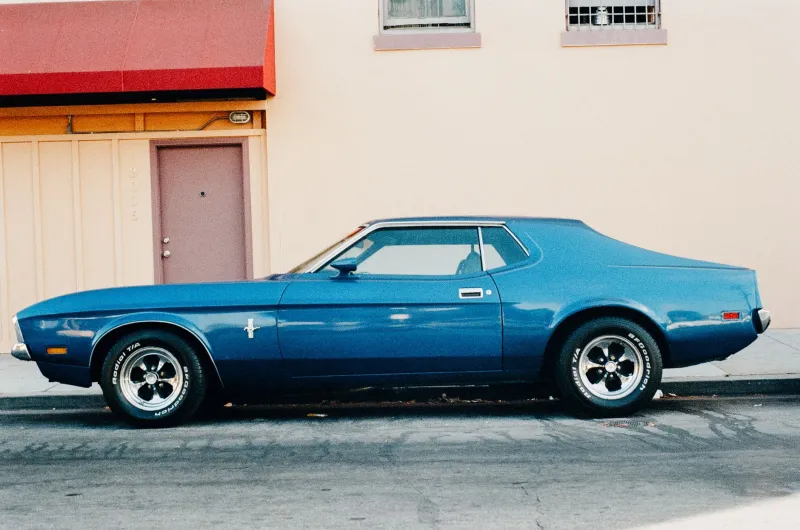
On a Saturday morning in 1974, in driveways and carports from Bakersfield to Baltimore, millions of ordinary American men were doing something that would look almost quaint today. They were lying under their cars.
Not because something had gone catastrophically wrong. Not because they couldn't afford a mechanic. They were doing it because maintaining your own vehicle was simply part of owning one — a practical skill passed from fathers to sons the way cooking was passed from mothers to daughters. You changed your oil every 3,000 miles. You replaced your own air filter. You gapped your own spark plugs. You bled your own brakes. These weren't advanced tasks. They were household maintenance, as ordinary as painting a fence or unclogging a drain.
That world is functionally gone. And the reasons it disappeared say something important about who controls your money, your transportation, and your economic independence in modern America.
The Backyard Garage Was Real
The postwar American car was, by design, a machine that rewarded amateur attention. Engines were large, accessible, and logically laid out. Components were standardized enough that a Chilton repair manual — a thick, grease-stained paperback that lived in garages across the country — could walk any reasonably competent adult through almost any repair job on almost any make and model.
The tools required were modest. A basic socket set, a floor jack, jack stands, and a drain pan covered the majority of routine maintenance. A timing light and a carburetor adjustment kit extended your range considerably. None of it required a computer. None of it required a dealer visit. None of it required a proprietary diagnostic code reader that cost $3,000 and was only available to licensed service centers.
This wasn't just about saving money, though it certainly did that. It was about competence and self-reliance — values that American culture openly celebrated. Knowing how your car worked meant you were harder to exploit. You could tell when a mechanic was recommending unnecessary work. You could diagnose a problem yourself before anyone tried to upsell you on a solution. The knowledge was power in the most literal sense.
Auto parts stores like NAPA and Western Auto thrived precisely because the customer base was doing its own work. The guy behind the counter knew what you were building. He could tell you which grade of oil your engine preferred and which brand of brake pads held up in cold weather. The transaction was between two people who both understood what they were talking about.
How the Hood Got Sealed
The shift didn't happen overnight, and it wasn't the result of any single decision. It was the cumulative effect of decades of engineering choices that, taken individually, each made a kind of sense — but together, systematically removed the amateur mechanic from the equation.
Emission control systems arrived in the 1970s and added complexity that made carburetor tuning more sensitive. Electronic fuel injection replaced carburetors entirely through the 1980s, eliminating one of the most commonly adjusted components in the home garage. Onboard diagnostic computers arrived and became mandatory, meaning that after 1996, a check engine light required a code reader to interpret — a device that most households didn't own and most auto parts stores charged to use.
Then came the sealed components. Transmissions that were never meant to be serviced by owners. Battery systems tucked inside wheel wells or under back seats. Headlight assemblies requiring bumper removal to access. Engines mounted sideways in transverse configurations that turned what was once a ten-minute filter swap into a two-hour puzzle.
Modern electric and hybrid vehicles have accelerated this trend dramatically. High-voltage battery systems genuinely do require specialist training to work on safely. Software controls that govern everything from braking to acceleration can only be updated by dealers with manufacturer authorization. Some automakers have gone further, using proprietary parts coding that means a replacement component won't function correctly unless a dealer activates it with their diagnostic system — even if the part is mechanically identical to the one it replaced.
This is not an accident. It is a business model.
What It Costs Ordinary Families
The financial consequences for working-class Americans are not abstract. They are monthly line items.
The average cost of a new vehicle in the United States now exceeds $48,000. The average annual cost of owning and operating that vehicle — including fuel, insurance, registration, and maintenance — runs between $10,000 and $12,000. For a family earning the median household income, that's a significant share of take-home pay tied up in a single depreciating asset.
Repair costs have risen sharply as complexity has increased. A simple brake job that a competent home mechanic could complete for $40 in parts now runs $300 to $600 at a shop, partly because labor rates have climbed but also because the diagnostic time required before any physical work begins has become a billable line item. An oil change that cost fifteen minutes and $25 in materials in the driveway now costs $80 to $120 at a quick-lube chain — for a job that hasn't fundamentally changed.
Dealer-only repairs are the most painful category. When a module fails that requires manufacturer software to recalibrate, you have no choice but to pay dealer rates. When a warranty-coded part needs to be activated, the dealer is the only authorized activator. The monopoly is engineered into the vehicle before you ever drive it off the lot.
For families living paycheck to paycheck — and a majority of Americans report they couldn't cover an unexpected $1,000 expense — a repair bill that requires dealer involvement can mean choosing between fixing the car and paying rent. For workers whose jobs depend on reliable transportation, that's not a minor inconvenience. It's a crisis.
The Broader Pattern
The driveway mechanic's disappearance is part of a larger story that runs through American economic life over the past fifty years: the systematic transfer of practical competence — and the money that competence represented — from individuals and households to specialists and corporations.
We used to fix our own appliances. We used to build our own decks. We used to grow some of our own food. We used to handle basic legal and financial paperwork without professional intermediaries. Each of these capabilities, eroded by complexity, regulation, or engineered obsolescence, represents a quiet tax on ordinary Americans — money that now flows to service providers instead of staying in household budgets.
The car is just the most visible example because the stakes are so high and the costs so immediate. Your vehicle is not an optional luxury for most Americans. It is the infrastructure of daily life. When you can no longer maintain it yourself, and when the specialists who can maintain it operate in a market with limited competition and maximum information asymmetry, you are at their mercy in a way your grandfather never was.
He had a floor jack, a Chilton manual, and a Saturday afternoon. That was enough. The fact that it no longer is tells you something worth knowing about where the power went — and who's holding it now.