When Your Word Was the Contract — How Small-Town America Did Business on a Nod and a Name

Somewhere in a box in a farmhouse attic in rural Ohio, there's probably a handwritten note that reads something like: "Sold to Earl Hutchins — 40 acres, south field, $800. Paid in full. — R. Mercer, June 1951." No lawyers. No title company. No escrow account. Two sentences, two signatures, and a deal that both men considered as binding as anything a courthouse could produce.
For a significant stretch of American commercial history, that wasn't unusual. It was standard.
The handshake economy wasn't naive or careless. It was built on something more durable than paperwork: the inescapable social accountability of people who lived, worshipped, and grew old in the same few square miles. When you shook hands with the man who sat three pews ahead of you at Sunday service, and whose kids played Little League with your kids, and whose wife bought eggs from your wife — breaking that agreement wasn't just a legal risk. It was social ruin.
 Photo: Little League, via res.cloudinary.com
The Infrastructure of Trust
Mid-century small-town America ran on what sociologists call dense social networks — overlapping webs of relationship, reputation, and mutual obligation that made formal enforcement mechanisms largely redundant. The contractor who framed your addition didn't need a written scope of work because you both understood that a shoddy job would follow him to every dinner table in the county. The farmer who borrowed seed money from a neighbor didn't need a promissory note because defaulting meant something far worse than a credit score hit: it meant becoming a man nobody trusted.
Think about what hiring a local contractor actually looked like in 1955. You called Donnie Marsh, the carpenter everyone in town knew. He came by, looked at the job, gave you a number, and you either shook on it or you didn't. He started Monday. You paid him Friday. If the work was good — and it almost always was, because his livelihood depended entirely on his local reputation — you told people. If it wasn't, you told more people, faster.
There was no Yelp. There was something better: a community with a memory.
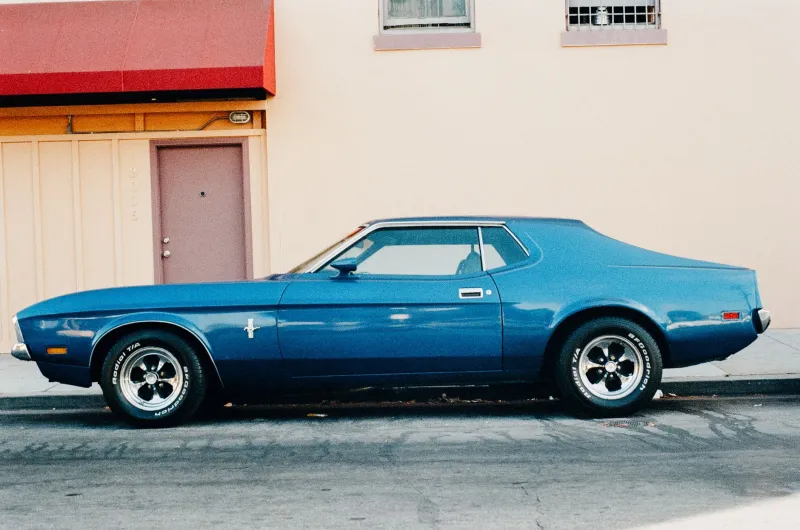
Buying a used car from a neighbor followed similar logic. You knew the man's history. You knew whether he maintained his equipment or ran things into the ground. The transaction happened over coffee at the kitchen table, not in a finance office surrounded by laminated menus of add-on warranties. A handshake, a title transfer, and the keys changed hands.
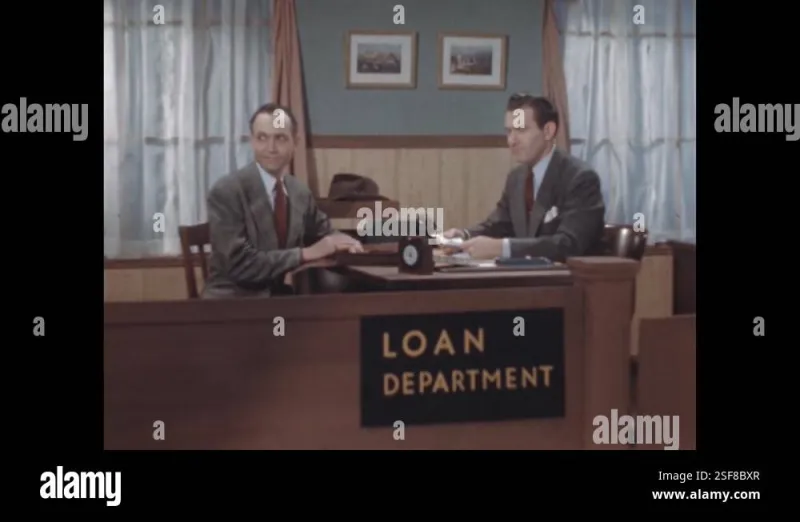
Lending money worked the same way. Families borrowed from each other, from local businessmen, from the savings and loan where the manager had personally approved your father's mortgage twenty years earlier. The terms were simple because the relationship was complex. Nobody needed seventeen pages of fine print when both parties expected to share a fence line for the next forty years.
What Broke the System
The handshake economy didn't collapse because Americans became less honest. It collapsed because the social architecture that made honesty structurally rational was dismantled by forces that had nothing to do with individual character.
First came mobility. When Americans began moving for work in large numbers through the postwar decades, the dense neighborhood networks that enforced informal agreements thinned out. A contractor who moved to your suburb from three states away had no local reputation to protect. A car dealer operating a lot off the interstate highway had no reason to care whether you told your neighbors about the experience. The social consequences that once made trust automatic simply didn't apply to strangers.
Then came corporate scale. As local businesses were absorbed by regional and national chains, the human relationship at the center of commerce was replaced by a transactional one. You weren't buying lumber from Dave at the hardware store who had known your family for two decades. You were buying from a corporation whose employees changed every eighteen months and whose incentives were structured around quarterly targets, not community standing.
The legal system responded rationally to this new landscape. When informal social enforcement disappeared, formal contractual enforcement expanded to fill the gap. Liability waivers appeared. Standard contracts grew longer. Arbitration clauses arrived. The paperwork burden wasn't imposed maliciously — it was a logical substitute for the trust infrastructure that mobility and corporate consolidation had quietly destroyed.
The Cost of the Paper Trail
Here's what that substitution actually costs ordinary Americans today.
Hiring a contractor now requires a written contract specifying scope, timeline, payment schedule, and dispute resolution — none of which prevents a bad actor from taking a deposit and disappearing, but all of which adds time, cost, and friction to every legitimate transaction. The legal fees associated with a simple home renovation agreement can run hundreds of dollars before a single nail is driven.
Buying a used car from a private seller now involves title searches, lien checks, bill of sale templates, and in some states, notarized documentation — for a $4,000 transaction between two private citizens. The paperwork designed to prevent fraud from strangers has been layered onto interactions that, in another era, would have taken fifteen minutes and a cup of coffee.
Personal loans between family members are now routinely accompanied by IRS-compliant documentation to avoid gift tax complications, interest rate disclosures, and written repayment terms. The federal government's involvement in whether your uncle loans you money to fix your roof would have seemed like a dark comedy to anyone doing business in 1955.
What a Name Used to Mean
None of this means the old system was without flaws. Handshake economies could exclude outsiders, disadvantage women, and protect the powerful at the expense of those without social standing. The absence of formal documentation left vulnerable people with no recourse when agreements were broken.
But it's worth sitting with what was lost alongside what was gained. In a world where a man's commercial reputation was inseparable from his identity as a neighbor, as a churchgoer, as a member of a community, the incentive to deal honestly wasn't abstract. It was immediate and personal and daily.
The contracts and clauses and liability waivers that now govern everyday American commerce are, in a very real sense, the paper residue of vanished community. We didn't get more paperwork because we got more dishonest. We got more paperwork because we stopped knowing each other — and stopped having to.