The Men Who Came Every Tuesday: America's Lost World of Doorstep Tradespeople
The Men Who Came Every Tuesday: America's Lost World of Doorstep Tradespeople
Somewhere in a mid-century American suburb, a woman is setting an empty glass bottle on her front step before bed. She doesn't need to call anyone. She doesn't need to open an app. By the time her family wakes up, two fresh quarts of whole milk will be sitting in its place, cold from the early morning air. The milkman has already come and gone.
That world — reliable, personal, almost rhythmic in its predictability — has been gone for decades. But understanding what it looked like, and what it gave people beyond just the products it delivered, says a lot about what we quietly gave up when convenience took over.
A World That Came to You
From roughly the 1920s through the 1960s, the American household was served by a rotating cast of tradespeople who arrived on schedule, knew your family by name, and made their living by being dependable.
The milkman was perhaps the most iconic. At peak delivery culture in the early 1960s, more than 30 percent of American milk was delivered directly to homes. Dairy routes were consistent — same streets, same stops, same faces, week after week. Drivers knew which families had a new baby and needed an extra quart. They knew who was on vacation and would hold the delivery. They left notes in the bottles. Customers left notes back.
The iceman predated the milkman's cultural peak. Before mechanical refrigeration became standard in American homes — which didn't happen broadly until after World War II — a block of ice delivered two or three times a week was how families kept food from spoiling. The iceman was a physical presence: heavy tongs, leather shoulder pad, dripping block hoisted up back steps into the kitchen icebox. Children in urban neighborhoods followed the wagon in summer, chipping off fragments to suck on in the heat.
Then there was the Fuller Brush man. Founded in 1906, the Fuller Brush Company built an empire on direct sales, sending representatives door to door across the country with sample cases full of brushes, mops, cleaning products, and personal care items. The Fuller Brush man was so embedded in American domestic life that he became a cultural shorthand — appearing in films, cartoons, and jokes as the cheerful, persistent figure who always managed to get inside.
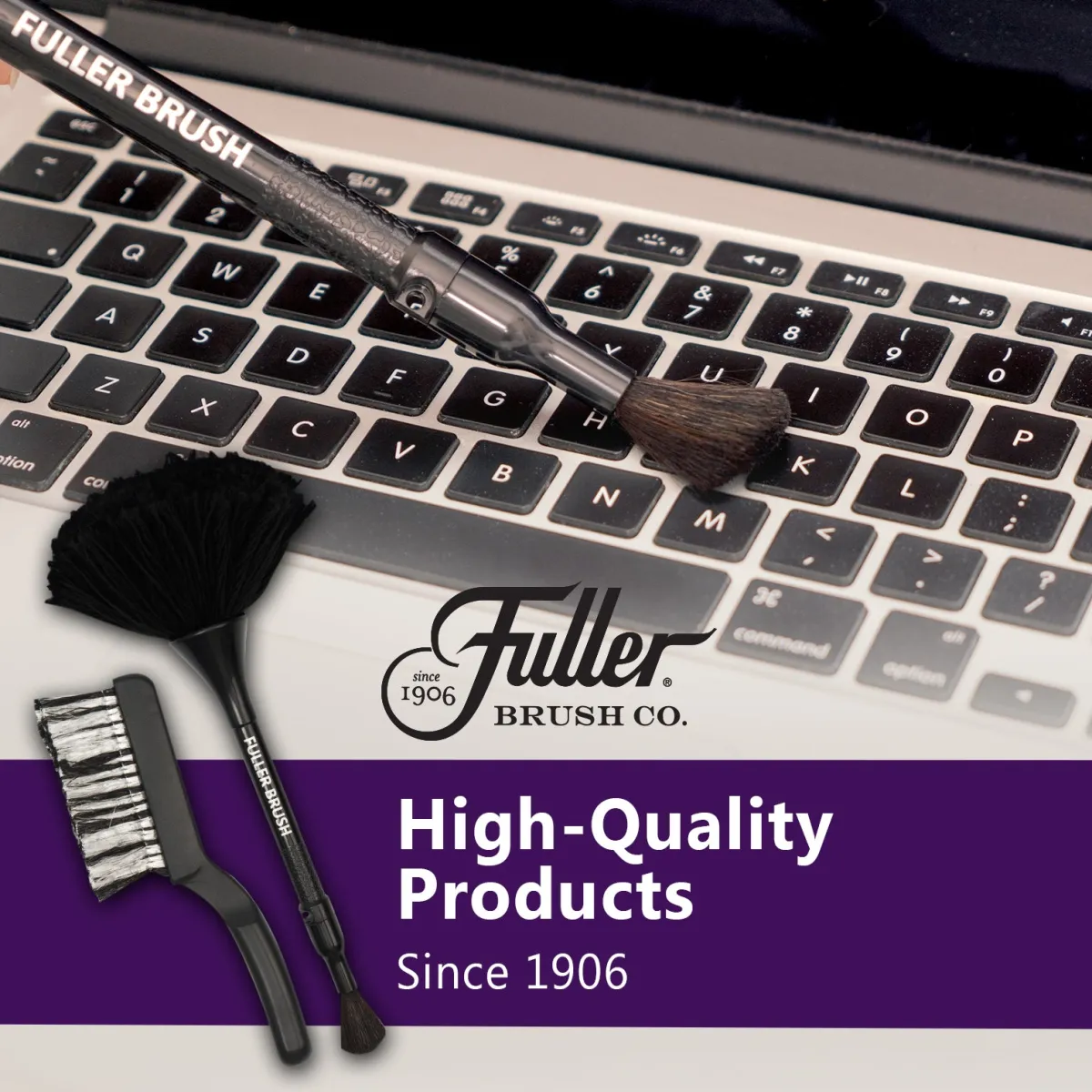 Photo: Fuller Brush Company, via fuller.com
Other regulars included the bread man from the local bakery, the Jewel Tea route salesman who brought coffee and spices, the Watkins man with his extracts and liniments, and in some regions, the knife sharpener who announced his arrival with a distinctive bell or whistle.
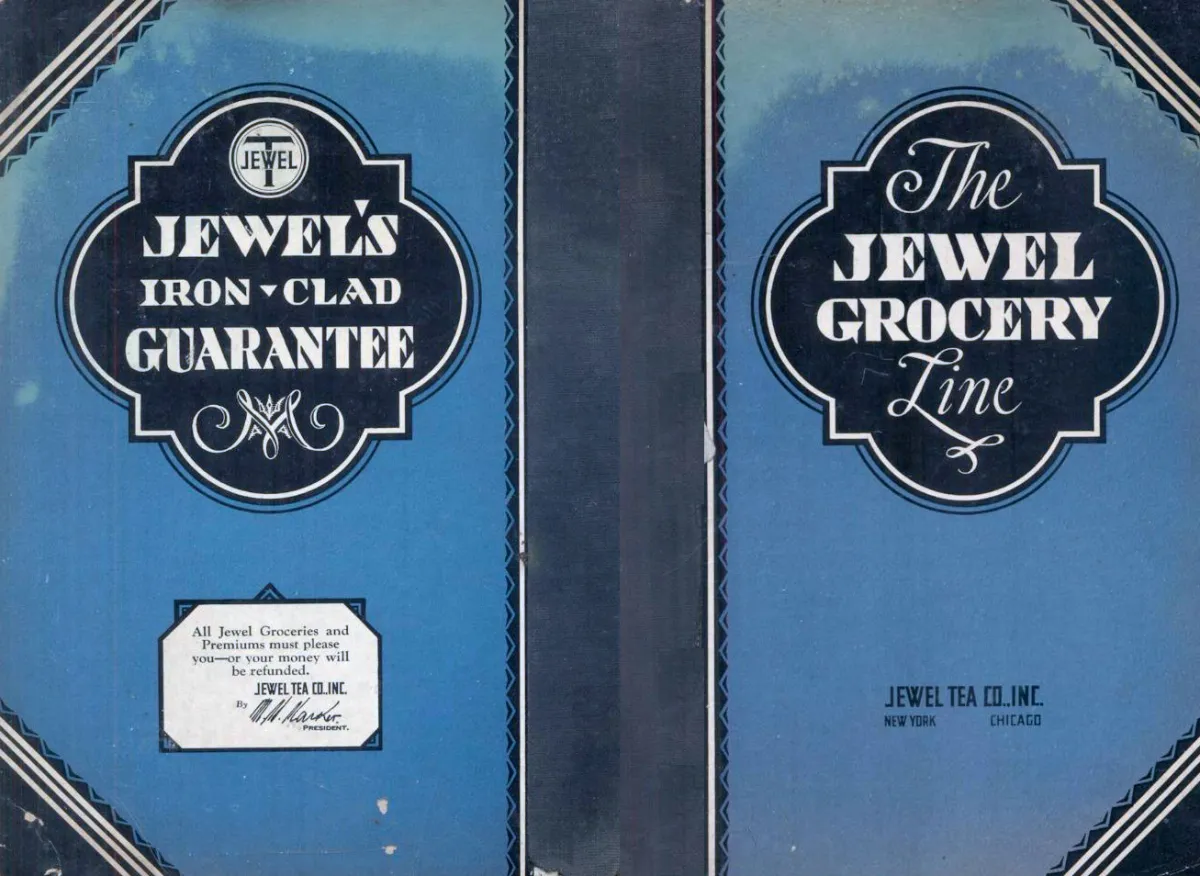 Photo: Jewel Tea, via chicagology.com
What the Schedule Actually Gave People
It's easy to romanticize this era, and it's worth being honest: these delivery relationships weren't equally available to everyone. In many cities, Black neighborhoods were underserved or ignored entirely by the same routes that blanketed white suburbs. The picture was never as universal as nostalgia suggests.
But where it did exist, the doorstep economy created something that modern logistics genuinely cannot replicate: a predictable human presence woven into the week.
For isolated homemakers — and most mid-century American women with children were largely homebound by the standards of today — these visits were often meaningful social contact. The milkman might be the only adult outside the family that a woman spoke to on a given morning. The exchange was brief, but it was real. It was a check-in. It was recognition.
For elderly residents living alone, the route driver was sometimes the first person to notice that something was wrong. Bottles left uncollected. A note unanswered. Drivers called neighbors, or checked in themselves. It wasn't a formal system. It was just what you did when you knew someone.
Neighborhoods had texture because of these relationships. You knew the milkman's name. He knew yours. That specific, repeated familiarity built a kind of informal trust that modern commerce has almost entirely engineered away.
The Porch Drop That Replaced It All
Today's delivery economy is, by almost every measurable standard, more efficient. You can order virtually anything online and have it appear at your door within 24 to 48 hours. In many cities, grocery delivery arrives in under an hour. The scale and speed are genuinely extraordinary.
But the driver who drops a cardboard box on your porch is operating under a completely different set of incentives. Speed is the metric. Contact is minimized. Many deliveries are now specifically designed to require no human interaction at all — a feature, not a flaw, according to the platforms that offer it.
The person who leaves your package doesn't know your name. They won't be back on Tuesday. There's no relationship, no continuity, and no one to notice if the boxes start piling up uncollected.
Amazon's delivery infrastructure is a marvel of modern logistics. It is not, by any stretch, a community.
What We Traded and What We Got
The tradespeople of mid-century America were products of their moment — of an economy that ran on personal relationships because the alternatives didn't exist yet. When supermarkets expanded, when refrigerators became standard, when cars gave families the mobility to shop for themselves, the doorstep economy faded naturally. Nobody took it away. It just became unnecessary.
But necessity and value aren't the same thing. The milkman wasn't just delivering milk. The Fuller Brush man wasn't just selling brushes. They were maintaining a kind of social infrastructure — one that made neighborhoods feel like places where people knew each other, looked out for each other, and showed up on schedule.
We gained enormous convenience when that world ended. It's worth at least acknowledging, clearly and without too much sentimentality, exactly what we lost.