The Year the Doctor Guessed — and the Decade Medicine Learned to Know
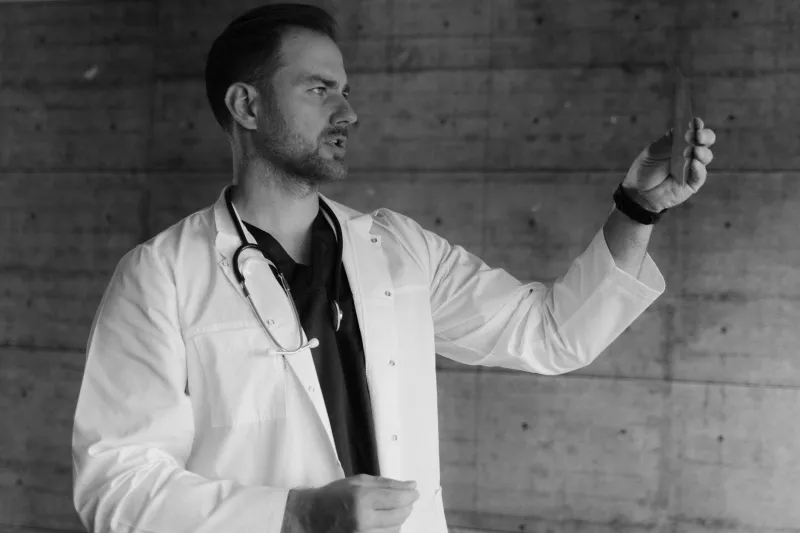
Imagine waking up exhausted every morning for six months. Your joints ache. You've lost weight without trying. Something is clearly wrong, but every visit to the doctor ends the same way — a shrug, a different theory, and another appointment two weeks out. Now imagine that stretching into a year. Then two.
For millions of Americans in the mid-20th century, that wasn't a nightmare scenario. It was just medicine.
When Diagnosis Was an Art Form — Not a Science
Before the tools we now take for granted, physicians worked primarily from observation, patient history, and instinct. A good doctor in 1950 was someone who listened carefully, pressed the right spots on your abdomen, and drew on decades of pattern recognition built from seeing similar cases. That sounds reasonable until you consider what they were working without.
There were no CT scans. No MRI imaging. Blood testing existed but was limited in scope — a far cry from today's comprehensive metabolic panels that can flag dozens of conditions simultaneously. Biopsies were invasive procedures requiring surgery, not the guided needle procedures done in outpatient clinics today. Ultrasound was still largely experimental. X-rays existed, but their diagnostic range was narrow.
What this meant in practice was a process of elimination that could take an agonizingly long time. A patient presenting with fatigue, unexplained weight loss, and abdominal discomfort might spend months cycling through guesses — anemia, a gastrointestinal infection, stress, depression. Each wrong answer cost time. And in cases involving cancer, autoimmune disease, or internal organ failure, time was the one thing patients couldn't afford to lose.
The Human Cost of Uncertainty
Historical accounts from early 20th-century medicine are full of cases that read as tragic in hindsight. Appendicitis was sometimes diagnosed only when the appendix had already ruptured. Tuberculosis was frequently misidentified as exhaustion or melancholy well into the disease's progression. Certain cancers were discovered only during surgical procedures performed for an entirely different suspected condition.
But beyond the dramatic cases, there was a quieter, more corrosive cost: the psychological weight of not knowing. Patients who spent a year or more in diagnostic limbo often described the experience as more destabilizing than the eventual diagnosis itself. The uncertainty ate into work, relationships, and identity. Without a name for what was wrong, there was no roadmap, no community of fellow patients, no targeted treatment. There was just waiting — and getting worse.
For working-class families, the toll was compounded. Every inconclusive appointment meant another lost workday, another co-pay, another train or bus ride across town to see a specialist who might know no more than the last one.
The Technology That Changed Everything
The transformation didn't happen overnight, but the acceleration of diagnostic technology in the latter half of the 20th century was nothing short of revolutionary. CT scanning arrived in clinical settings in the early 1970s. MRI followed in the 1980s. By the 1990s, digital imaging had replaced film in most major hospitals, allowing images to be stored, shared, and reviewed by specialists anywhere in the country.
Blood testing expanded dramatically too. Where a 1950s panel might check for a handful of markers, a modern comprehensive blood workup can assess liver function, kidney performance, thyroid activity, inflammatory indicators, cholesterol levels, blood glucose, and dozens of other data points — all from a single draw, with results back within 24 hours.
Genetic testing has pushed things further still. Conditions that once required years of symptomatic observation to diagnose can now be identified through a DNA analysis that looks directly at the biological blueprint. Rare diseases that stumped physicians for decades are increasingly solvable through genomic sequencing.
What a Single Appointment Can Do Now
Here's what that looks like in real terms today. A patient walks into a primary care appointment complaining of fatigue and joint pain. Within that visit, the doctor can order a blood panel, refer the patient for imaging, and — if something concerning appears — have a specialist reviewing the results by the following afternoon. In straightforward cases, a diagnosis can be confirmed within a week. In complex ones, the diagnostic process that once took years now typically unfolds over weeks.
Emergency medicine has seen even more dramatic compression. A patient presenting with chest pain at a modern ER will receive an EKG within minutes, blood enzyme tests that can confirm or rule out a heart attack within hours, and imaging if needed — all before most people have finished the paperwork. Conditions that were once death sentences simply because they were caught too late are now routinely identified early enough to treat.
What We Gained — and What It Still Costs
None of this means the system is perfect. Diagnostic errors still happen. Certain conditions — particularly those affecting women and people of color — remain chronically underdiagnosed due to gaps in research and systemic bias. Rare diseases can still take years to identify, even with modern tools, simply because they fall outside common clinical patterns.
And access remains uneven. The diagnostic revolution has been most transformative for people with good insurance, proximity to well-equipped facilities, and the time to pursue answers. For those without those advantages, the experience can still feel closer to the old world than the new one.
But even accounting for those gaps, the distance between where we were and where we are is staggering. A doctor in 1940 working from instinct and a stethoscope. A patient in 2024 leaving an appointment with a confirmed diagnosis, a printed treatment plan, and a follow-up already scheduled.
The year spent waiting and wondering? For most Americans today, that's a story from another era — one that's worth remembering, if only to understand how much was quietly at stake every time a diagnosis came too late.