When the Man at the Bank Counter Already Knew Your Answer
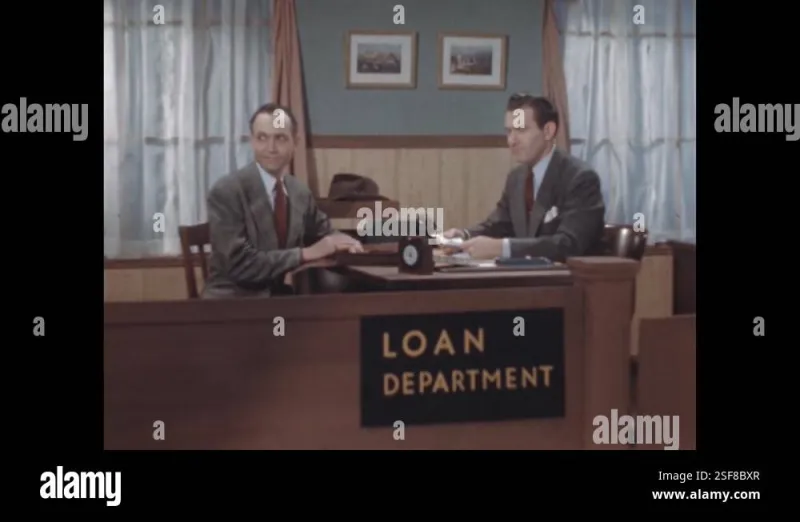
Photo: vintage community bank loan officer desk handshake small town 1950s, via c8.alamy.com
Somewhere in a box of old papers, a lot of American families still have the documentation from their grandparents' first home purchase or small business loan. If you look closely, you might notice something surprising: the paperwork is thin. Sometimes just a few pages. A basic application, a note about income, and a signature.
No FICO score. No debt-to-income ratio calculated to two decimal places. No algorithmic risk assessment generated by a system that has never heard your name.
Just two people across a wooden counter, one of whom already knew the other.
The Community Bank as a Social Institution
For much of the 20th century, American banking was intensely local. The savings and loan on Main Street wasn't just a place to deposit a paycheck — it was woven into the community in ways that are genuinely difficult to picture today. The loan officer often lived in the same neighborhood as the people he served. He attended the same church, coached Little League, watched families weather hard seasons and build back up. He had context that no spreadsheet could replicate.
 Photo: Little League, via res.cloudinary.com
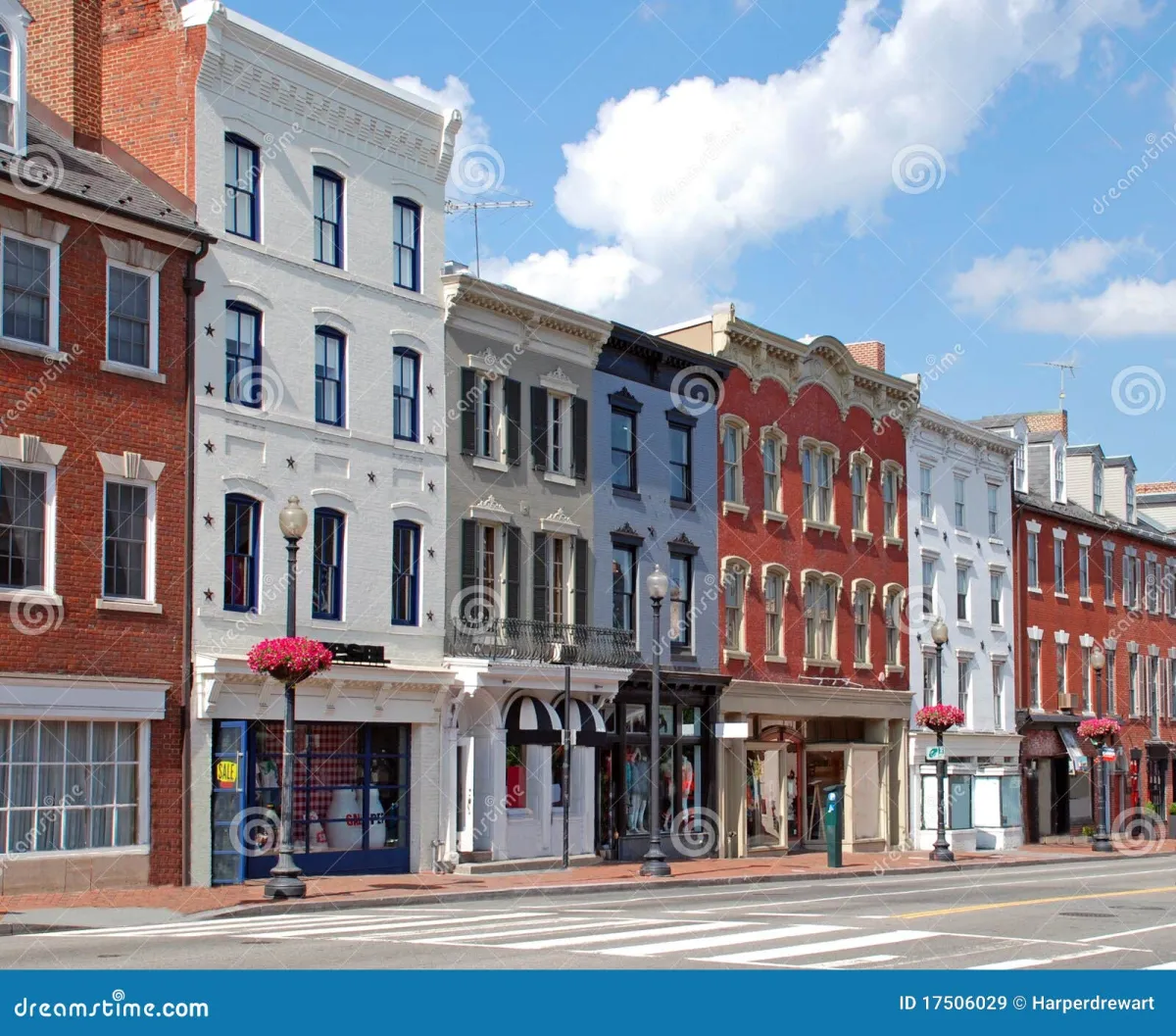 Photo: Main Street, via thumbs.dreamstime.com
When a young mechanic came in hoping to borrow enough to open his own shop, the conversation that followed wasn't primarily about numbers. It was about character. Had he paid back the smaller loan he took out two years ago? Did he show up on time, work hard, treat people fairly? Was his father a reliable man? These weren't irrelevant considerations — they were, in many ways, the whole point.
Credit histories existed in some form, but they were informal and human. Reputation functioned as collateral. A man who was known to be honest and hardworking in a town of five thousand people carried that reputation into the bank with him like a second form of ID.
What That Made Possible
This system had real and meaningful consequences for working-class entrepreneurship. A first-generation immigrant who had built goodwill in his community over a decade could sometimes secure a business loan that his paper financial profile alone would never have supported. A young couple buying their first home in a neighborhood where the banker's kids went to school with their kids had a path to ownership that relied on relationship rather than formula.
The mid-century American small business boom — the hardware stores, the diners, the family-run pharmacies, the corner groceries — was fueled in significant part by this model of relationship lending. Capital flowed through trust networks that were built face to face over years.
None of this was perfect. Far from it. The same informal system that opened doors for some slammed them shut for others. Racial discrimination in lending was pervasive and well-documented. Black-owned businesses and Black homebuyers were routinely denied loans regardless of their character, their history, or their community standing. The handshake economy was never equally distributed.
The Rise of the Score
The shift began gradually. The Fair Isaac Corporation introduced the FICO score in 1989, and over the following decade, algorithmic credit assessment became the industry standard. The logic was appealing: remove human bias and subjectivity, replace it with consistent, data-driven evaluation. Apply the same criteria to everyone and let the numbers decide.
In some respects, the transition delivered on that promise. Lending became more consistent. Certain forms of overt discrimination became harder to sustain when decisions were tied to documented criteria. The system scaled in ways that the old handshake model never could — allowing banks to serve millions of applicants efficiently across the country.
But something was also lost. The algorithm knew your payment history and your credit utilization ratio. It did not know that you'd spent three years caring for a sick parent, running up medical debt while your income stalled. It didn't know that the small business you were trying to fund had already survived one recession on sheer determination. It didn't know you at all.
Who Gets Left Behind
The consequences of that gap are still playing out. Studies have consistently shown that algorithmic lending tends to disadvantage people with thin credit files — recent immigrants, young adults, people who have operated largely in cash economies. These are often exactly the kinds of working-class entrepreneurs who, in an earlier era, might have walked into a community bank and made a compelling case based on everything the numbers don't capture.
Small business lending to minority entrepreneurs remains significantly lower than lending to their white counterparts at comparable financial profiles, suggesting that the algorithmic model hasn't fully solved the discrimination problem — it's shifted it and obscured it.
Meanwhile, the community banks themselves have largely disappeared. Consolidation has reduced the number of independent community banks in the US by more than half since the 1980s. The loan officer who knew your name has been replaced, in most cases, by an application portal and a decision that arrives by email.
The Trade-Off We're Still Negotiating
There's no clean verdict here. The old system was personal but deeply flawed. The new system is scalable but cold, and its neutrality is more complicated than it appears. What's clear is that the transition reshaped the geography of opportunity in America — who gets to borrow, who gets to build, and whose story gets told in numbers versus in person.
For the mechanic who wanted to open his own shop, the answer used to depend on whether the man across the counter believed in him. Today it depends on a score he may not fully understand, generated by a process he never sees.
Something was gained. Something was also left on that wooden counter, and we're still figuring out what to do about it.